Work with small actions to create conditions for big improvements
In complex domains, small actions can lead to significant changes but outcomes are unpredictable. Therefore, develop a portfolio of safe-to-fail experiments to probe the system and shape emergent improvements rather than relying on false predictions.
THE IDEA
Key-point #3: Work with small actions to create conditions for big improvements
“Managing the present to create a new direction of travel is more important than creating false expectations about how things could be in the future.” Dave Snowden
Besides uncertainty and unpredictability, another phenomenon of the Complex domain is how small initial changes can result in significant changes. That said, not all interventions will have impacts; some will have no effect at all. Consequently, since the impacts cannot be predicted or assured, we develop a portfolio of trial and error projects. In this approach, the trials are bounded probes designed so that an unsuccessful intervention does not cause unacceptable harm. A pilot or other trial is not automatically safe to fail.
Developing a trial and error portfolio is not randomly choosing to try anything. Rather it feeds off the complex issues identified on the Cynefin maps. The disciplined process focuses on addressing immediate safety concerns (e.g., close to the Clear/Chaotic boundary) and facilitating learning. One practical approach is to assemble learning teams, each running a small project from start to finish. Teams are intentionally kept small, with three to five members. A recommended composition is a trio with an experienced field worker bringing first-hand knowledge of safety heuristics, a recent college graduate with fresh ideas, and a safety leader who has the authority to make things happen.
We believe an overarching safety strategy is managing a mixed portfolio of ordered and complex projects to strengthen robustness (Safety-I) and build resilience (Safety-II). As you might imagine, there is an ongoing debate between safety practitioners who promote Safety-II and those who defend Safety-I. We side with researchers who have concluded that combining Safety-I and Safety-II perspectives broaden understanding of safety management. (15)
Robustness is taking a Safety-I approach to prevent something from going wrong in the Clear domain and falling into the Chaotic domain. This is the primary intent of “fail-safe” ordered engineering projects and programs. Resilience is associated with Safety-II because “everyone at the sharp end knows that it is only possible to get work done by continually adjusting what they do under expected and unexpected conditions.” (16) The main intent behind trial and error is to shape the safety culture by stimulating change towards the safety vision while on an emergent pathway forward. We monitor how interventions affect the system, including unexpected effects. The distinction is between learning from what happens and judging everything against a single predicted outcome; it does not require abandoning useful measurements.
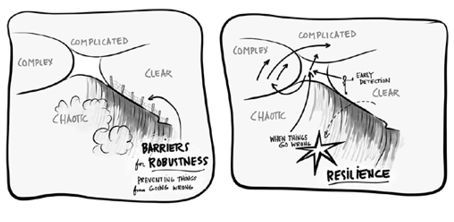
Figure 6. Cynefin guided safety strategies
From the operational aspect of people working in a system, robustness, as the left illustration in Figure 6 shows, is the appropriate application of rigid constraints (safety rules, standard operating procedures, best practices). Resilience, shown in the right illustration, is recovering from failure. In safety, a fall into the Chaotic domain relates to human accidents and failures – machines, equipment, tools, vehicles, facilities. Some incidents require immediate stabilization; others can be handled through established procedures. The appropriate response depends on the situation rather than the injury’s size alone.
In the Chaotic domain you ‘Act-Sense-Respond’ to stabilize the bad situation and move to the Confused domain. Why confused? Because you still don’t know why the accident occurred. So the next step is to analyze, either with causal experts in the Complicated domain, or seek to understand in the Complex domain. It’s highly conceivable that an investigation will involve a move to both Complicated and Complex domains.
In his book Drift into Failure, (17) Sidney Dekker warns against assuming that the entirety of the accident must be investigated in the Complicated domain, “The search for the ‘broken part or person’ that underpins linear models, where risk is considered in terms of – energy-to-be-contained, barriers and layers of defense, or cause and effect – are misleading – because they assume rational decision-making.” His point is that we need to make sense of the conditions the worker faced when a fateful decision was made. This is accomplished by discovering in the Complex domain what system constraints influenced the decision.
As shown in Figure 6, resilience also includes early detection of weak signals (e.g., workarounds, psychological fear). When departures from safe practice become accepted as normal, the pattern can involve what Dianne Vaughan calls the “normalization of deviance.” The early detection pathway is through the Confused domain to the Complex domain to make sense of the system as a whole, work with the present state, and work with small actions to create conditions for significant improvements.
When to use it
A project team uses safe-to-fail experiments to test new features in a complex software system.
An emergency response team runs small drills to identify systemic weaknesses.
A safety committee in a hospital uses small pilots to improve hand hygiene compliance.
A business leader encourages teams to use trial and error to innovate in uncertain markets.
FROM THEORY TO EVERYDAY LIFE
In practice
Learning Team Composition in Safety Management
A practical approach is to assemble small learning teams of three to five members, such as an experienced field worker, a recent college graduate, and a safety leader. These teams run small projects from start to finish to probe complex issues identified on Cynefin maps.
Monitoring an Experiment’s Effects
A team monitors whether a small intervention shifts the system in a useful direction and watches for unexpected harm. It uses observations and measurements to decide whether to adapt, expand, or stop the experiment, rather than treating a predicted outcome as certain.
A MOMENT TO REFLECT
Put it to work.
What small, safe-to-fail experiments could you run in your current work to explore complex issues?
How can you assemble a diverse learning team to probe the system effectively?
What weak signals might indicate normalization of deviance in your organization, and how could you detect them earlier?
CONTINUE THE CONVERSATION
Source texts
- Cynefin - Weaving Sense-Making into the Fabric of Our World ED02 (Dave Snowden Sonja Blignaut Zhen Goh)