The Titanic Tragedy – Overall Root Causes
To properly understand the Titanic tragedy, one must look beyond the immediate actors and consider the many factors that set the stage—including regulations, design, route, and atmospheric conditions—which often go back weeks, months, or even years before the event.
THE IDEA
So, having considered many of the key elements of the Titanic tragedy, we can reframe what happened by looking at Illustration 12.2.
It wasn't just those ‘in the thick of it’ that fateful night who were the cause of the sinking of the Titanic and the terrible loss of life. You could say many involved that night were ‘actors on the stage’ of a Greek tragedy. A whole number of elements contributed to the death toll: the southern track route, the atmospheric conditions, the number of lifeboats, the design of the bulkheads, the regulations at the time, etc. Thus, to properly understand the root causes of the Titanic tragedy, you need to recognise many of the ingredients that led to this tragedy go back weeks, months and even years before April 1912.
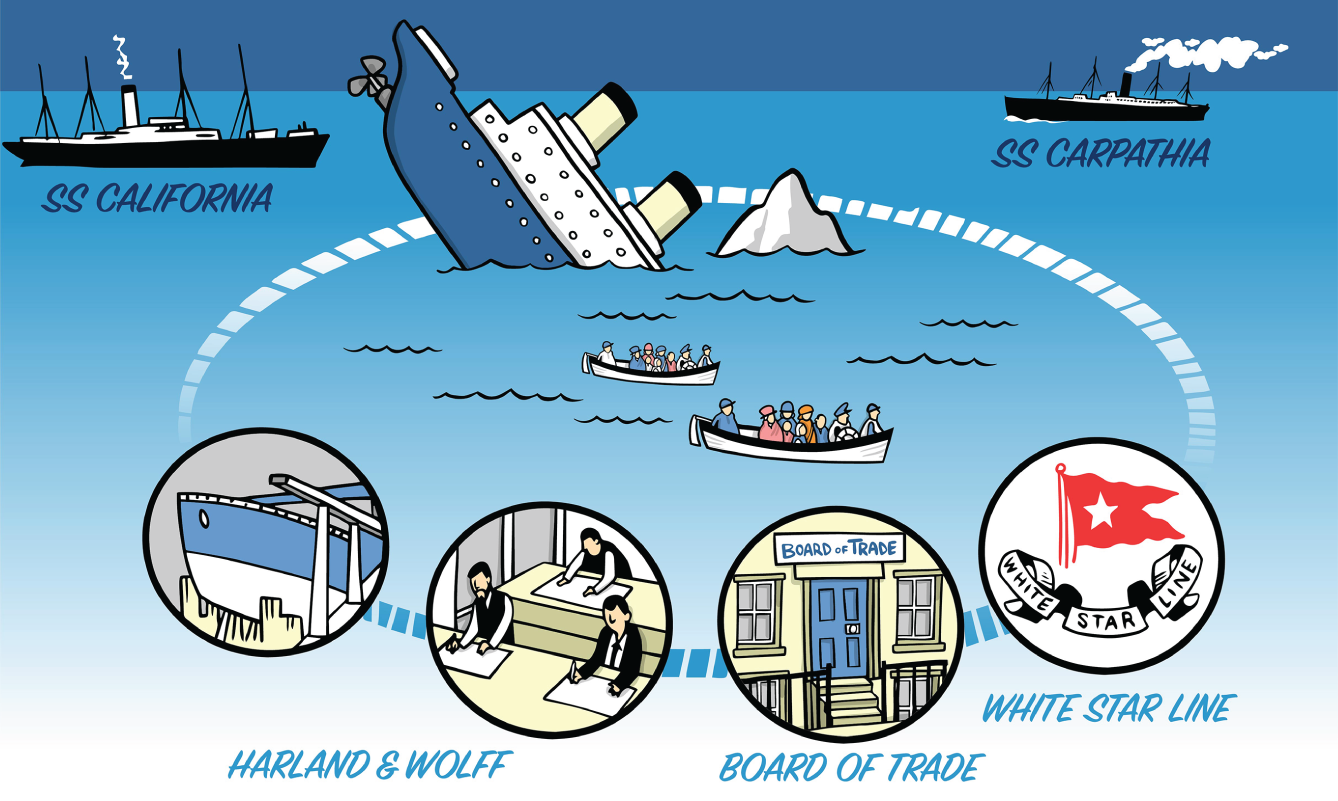
Illustration 12.2 The Titanic tragedy
So, don't just look at the actors on the stage; look at how the whole stage has been set.
When to use it
Investigating industrial accidents or safety incidents to uncover latent system failures.
Analyzing historical events to understand why decisions were made and how multiple factors converged.
Reviewing project failures in organizations to identify process, policy, and cultural contributors.
Designing safety systems that account for human factors and environmental conditions rather than expecting perfect performance.
FROM THEORY TO EVERYDAY LIFE
In practice
The Titanic Disaster
The source examines the Titanic disaster of 1912 through factors that shaped events before the night of the sinking: the route, lifeboat provision, bulkhead design, regulations, and atmospheric conditions. It uses these factors to broaden an investigation beyond the actions of the crew, rather than demonstrating here the exact contribution of each.
A MOMENT TO REFLECT
Put it to work.
Think of a major failure or disaster you know about. What were the systemic factors that set the stage, beyond the immediate actors?
How might focusing only on the 'actors on the stage' mislead us in understanding organizational or societal problems?
What steps can leaders take to shift from blaming individuals to examining the whole system that shaped their decisions?
Often confused with
CONTINUE THE CONVERSATION
Source texts
- Beyond the Five Whys Root Cause Analysis and Systems Thinking (James C. Paterson)