The Benefits of Doubt
Grant argues that moderate impostor thoughts can sometimes encourage preparation, strategy revision, and learning, while chronic feelings of unworthiness can be harmful. He describes studies linking impostor feelings with better interpersonal behavior or performance ratings; these associations do not establish that feeling like an impostor causes better performance.
THE IDEA
Just a month and a half before Iceland’s presidential election, Halla Tómasdóttir was polling at only 1 percent support. To focus on the most promising candidates, the network airing the first televised debate announced that they wouldn’t feature anyone with less than 2.5 percent of the vote. On the day of the debate, Halla ended up barely squeaking through. Over the following month her popularity skyrocketed. She wasn’t just a viable candidate; she was in the final four.
A few years later, when I invited her to speak to my class, Halla mentioned that the psychological fuel that propelled her meteoric rise was none other than impostor syndrome. Feeling like an impostor is typically viewed as a bad thing, and for good reason—a chronic sense of being unworthy can breed misery, crush motivation, and hold us back from pursuing our ambitions.
From time to time, though, a less crippling sense of doubt waltzes into many of our minds. Some surveys suggest that more than half the people you know have felt like impostors at some point in their careers. It’s thought to be especially common among women and marginalized groups. Strangely, it also seems to be particularly pronounced among high achievers.
I’ve taught students who earned patents before they could drink and became chess masters before they could drive, but these same individuals still wrestle with insecurity and constantly question their abilities. The standard explanation for their accomplishments is that they succeed in spite of their doubts, but what if their success is actually driven in part by those doubts?
To find out, Basima Tewfik—then a doctoral student at Wharton—recruited a group of medical students who were preparing to begin their clinical rotations. She had them interact for more than half an hour with actors who had been trained to play the role of patients presenting symptoms of various diseases. Basima observed how the medical students treated the patients—and also tracked whether they made the right diagnoses.
A week earlier the students had answered a survey about how often they entertained impostor thoughts like I am not as qualified as others think I am and People important to me think I am more capable than I think I am. Those who self-identified as impostors didn’t do any worse in their diagnoses, and they did significantly better when it came to bedside manner—they were rated as more empathetic, respectful, and professional, as well as more effective in asking questions and sharing information. In another study, Basima found a similar pattern with investment professionals: the more often they felt like impostors, the higher their performance reviews from their supervisors four months later.
This evidence is new, and we still have a lot to learn about when impostor syndrome is beneficial versus when it’s detrimental. Still, it leaves me wondering if we’ve been misjudging impostor syndrome by seeing it solely as a disorder.
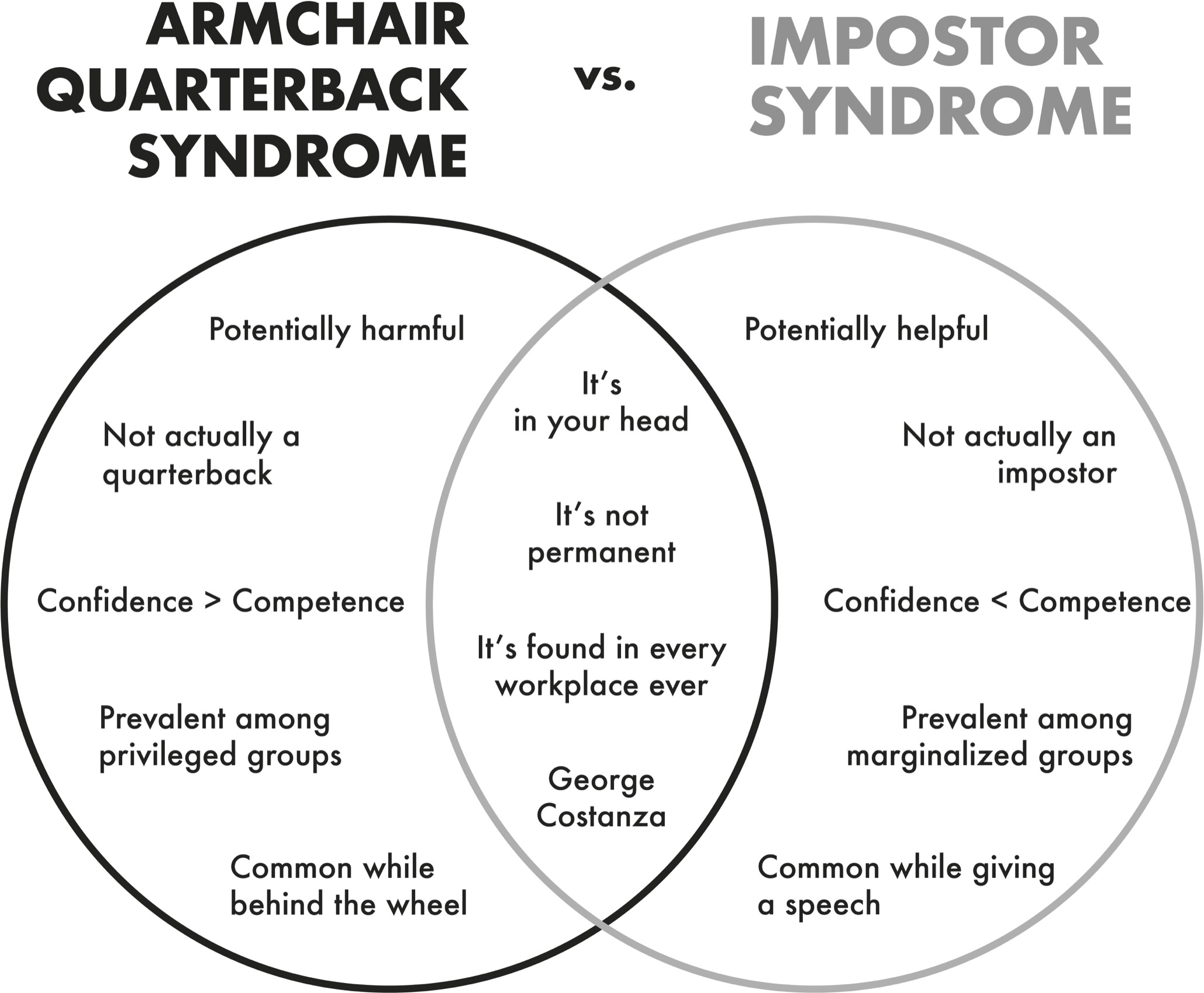
When our impostor fears crop up, the usual advice is to ignore them—give ourselves the benefit of the doubt. Instead, we might be better off embracing those fears, because they can give us three benefits of doubt.
The first upside of feeling like an impostor is that it can motivate us to work harder. It’s probably not helpful when we’re deciding whether to start a race, but once we’ve stepped up to the starting line, it gives us the drive to keep running to the end so that we can earn our place among the finalists.* In some of my own research across call centers, military and government teams, and nonprofits, I’ve found that confidence can make us complacent. If we never worry about letting other people down, we’re more likely to actually do so. When we feel like impostors, we think we have something to prove. Impostors may be the last to jump in, but they may also be the last to bail out.
Second, impostor thoughts can motivate us to work smarter. When we don’t believe we’re going to win, we have nothing to lose by rethinking our strategy. Feeling like an impostor puts us in a beginner’s mindset, leading us to question assumptions that others have taken for granted.
Third, feeling like an impostor can make us better learners. Having some doubts about our knowledge and skills takes us off a pedestal, encouraging us to seek out insights from others. As psychologist Elizabeth Krumrei Mancuso and her colleagues write, “ Learning requires the humility to realize one has something to learn.”
Some evidence on this dynamic comes from a study by another of our former doctoral students at Wharton, Danielle Tussing. Danielle gathered her data in a hospital where the leadership role of charge nurse is rotated between shifts, which means that nurses end up at the helm even if they have doubts about their capabilities. Nurses who felt some hesitations about assuming the mantle were actually more effective leaders, in part because they were more likely to seek out second opinions from colleagues. They saw themselves on a level playing field, and they knew that much of what they lacked in experience and expertise they could make up by listening.
When to use it
When starting a new job, turn uncertainty about your abilities into specific preparation and questions for colleagues.
In a leadership role, acknowledging doubts can make you more open to input and improve team collaboration.
When learning a complex skill, use doubts to identify where feedback or instruction would help.
During a high-stakes project, moderate doubt may prevent complacency and encourage innovative problem-solving.
FROM THEORY TO EVERYDAY LIFE
In practice
Halla Tómasdóttir's Presidential Campaign
Halla Tómasdóttir was polling at 1% before Iceland’s presidential election and later reached the final four candidates. She told Grant that impostor feelings had helped motivate her campaign. This is her account of what drove her, rather than a controlled test of the effect.
Medical Students Study
In Tewfik’s study, medical students who reported more impostor thoughts did not perform worse on diagnoses in simulated patient encounters. They received better ratings for bedside manner, including empathy, communication, and professionalism.
Investment Professionals Study
In another study reported by Grant, Tewfik found that investment professionals who reported more frequent impostor feelings received higher supervisor performance reviews four months later.
Charge Nurse Leadership Study
Grant reports that charge nurses who had doubts about taking the leadership role were rated as more effective leaders. They were also more likely to seek colleagues’ second opinions, a possible explanation for the association.
A MOMENT TO REFLECT
Put it to work.
When have you experienced impostor syndrome, and how did it affect your motivation or performance?
Can you recall a time when doubting your abilities led you to seek advice or learn something new?
How might you reframe feelings of doubt as a tool for growth rather than a sign of inadequacy?
Often confused with
CONTINUE THE CONVERSATION
Source texts
- Think Again The Power of Knowing What You Dont Know (Adam Grant)