Subjective Value Theory
Subjective value theory explains value in terms of what a person wants to achieve and how a good serves those aims. This passage extends the idea to a proposed sexual-market-value ranking; that extension and its claims about common preferences require evidence beyond the economic principle.
THE IDEA
Graph 6 Objective Value Theory Example
The passage contrasts intrinsic value with subjective value: what a person will give for something depends on the ends it serves. A bar of gold may ordinarily command more in exchange than 2 lbs. of meat, while a starving trader may prefer the meat. Transferring an object to someone who values it more can create a gain without changing the object itself.
The author applies this idea to attraction through a proposed 1 - 10 sexual-market-value scale. People can value traits such as humor, kindness, intelligence, and appearance differently, while comparisons and context may also affect their judgments. The passage invokes the cheerleader effect and contrast bias. (9)
It then argues that a woman rated 10 by eight men, or a man rated 10 by eight women, would tend to rank highly among other observers. From this proposed convergence it infers a near-objective ranking across a global market. (22) Agreement within a small group, however, would not by itself establish a universal scale or make a person’s worth an objective quantity.
The author further proposes that male libido detects signals of fertility and cites claims about preferences among congenitally blind men. (10) (11) The excerpt also notes variation across cultures where calories are scarce and offers a possible explanation involving body fat and pregnancy. The referenced studies are not included here, so their methods and the reach of these claims cannot be assessed from this passage.
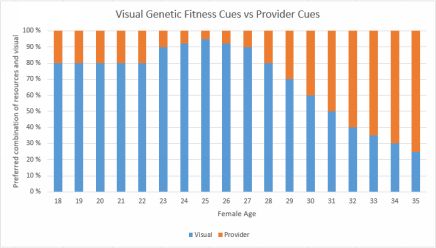
For male attractiveness, the passage cites research on trade-offs between appearance and resources (12) and on women’s visual attention during ovulation (13). It argues that age and the distinction between short-term and long-term relationships affect preferences. Those are empirical claims about particular populations and conditions, rather than consequences that follow from subjective value theory alone.
When to use it
In dating, recognizing that people value different traits can help distinguish personal compatibility from the idea of a universal ranking.
In negotiations, framing an offer to align with the counterparty's subjective valuation can increase the likelihood of agreement.
In marketing, emphasizing subjective benefits (e.g., status, identity) rather than objective features can increase perceived value.
In personal relationships, understanding that different people value different traits can foster acceptance and reduce conflict.
FROM THEORY TO EVERYDAY LIFE
In practice
Gold vs. Meat in Starvation
A bar of gold is normally more valuable than 2 lbs. of meat, but in a starvation scenario, the meat becomes more valuable to a starving trader because it directly serves his survival ends.
Convergence of Subjective SMV
The passage proposes that a woman rated a 10 by eight men would tend to rank highly among other men. That is a claim about agreement in preferences; establishing it would require evidence about the observers and population being compared.
A MOMENT TO REFLECT
Put it to work.
How does your personal valuation of a potential partner differ from that of others? What biases influence your assessment?
Recall a time when you overvalued or undervalued something or someone. How did your subjective valuation affect your decision?
How can understanding that value is subjective help you in a negotiation or in setting personal standards?
Often confused with
CONTINUE THE CONVERSATION
Source texts
- Rolf Dobelli - The Art of Thinking Clearly-Harper Paperbacks (2014)