Strategic Direction
Realized strategy can combine actions carried out deliberately with patterns that emerge as an organization responds to events. The source uses Cynefin to consider which approaches suit different strategic situations.
THE IDEA
Strategic direction
An organization’s strategic direction can be expressed as a change over time. Some of these changes are the result of deliberate, planned action. Others are a result of a reaction to the emergence of change in the environment. Henry Mintzberg describes strategy as the realized actions resulting from the combination of intended and emergent strategies. (8) Organizations that are led with too much planning and deliberate action can become slow and cumbersome. On the other hand, organizations that are too fluid and rely on emergence can become incoherent and reactionary.
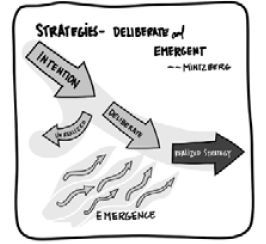
Figure 2. Strategy as a combination of intended and emergent action
Most executives show a preference for an ordered systems approach to strategy, decision making, and resource allocation. So part of our first intervention in most organizations starts with a description of Cynefin and has the client contextualize their strategy opportunities to move forward and their response to those opportunities.
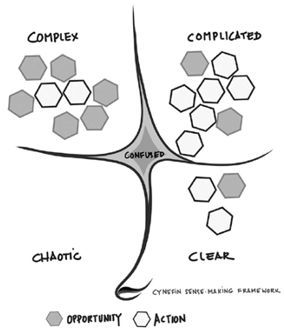
Figure 3. Contextualizing strategy opportunities using the Cynefin domains
When to use it
When developing an annual strategic plan, include both specific goals and mechanisms for pivoting based on new information.
In a startup, use emergent strategy to respond to rapid market changes while maintaining a clear overall vision.
Large organizations can use Cynefin to determine whether to apply a planned or emergent approach to different strategic initiatives.
During a crisis, a balance of intended structure and emergent flexibility can prevent both paralysis and chaos.
FROM THEORY TO EVERYDAY LIFE
In practice
Balancing Intended and Emergent Strategy
A company sets a formal strategic plan (intended) but also maintains flexibility to adapt to market changes (emergent). For example, a software company might plan to release specific features but after user testing, they pivot to focus on different functionality, combining intended goals with emergent insights.
Cynefin Application in Strategy
An organization uses the Cynefin framework to classify strategic opportunities: simple (best practice), complicated (expert analysis), complex (probe-sense-respond), and chaotic (act-sense-respond). This helps decide whether to use deliberate or emergent approaches.
A MOMENT TO REFLECT
Put it to work.
How does your organization currently balance deliberate planning with emergent adaptation?
Think of a recent strategic decision: was it more intended or emergent? What were the outcomes?
How might using the Cynefin framework change your approach to strategic planning?
CONTINUE THE CONVERSATION
Source texts
- Cynefin - Weaving Sense-Making into the Fabric of Our World ED02 (Dave Snowden Sonja Blignaut Zhen Goh)