Desirability Bias
Desirability bias occurs when what we want to happen influences what we predict will happen. Adam Grant illustrates it with a forecaster who shifted toward his preferred election outcome, then acknowledged the mistake. Recording assumptions and reasons to change a forecast can help expose this bias.
THE IDEA
Mistakes Were Made . . . Most Likely by Me
As prescient as Jean-Pierre Beugoms’s bet on Trump was, he still had trouble sticking to it in the face of his feelings. In the spring of 2016, he identified the media coverage of Hillary Clinton’s emails as a red flag, and kept predicting a Trump victory for two months more. By the summer, though, as he contemplated the impending possibility of a Trump presidency, he found himself struggling to sleep at night. He changed his forecast to Clinton.
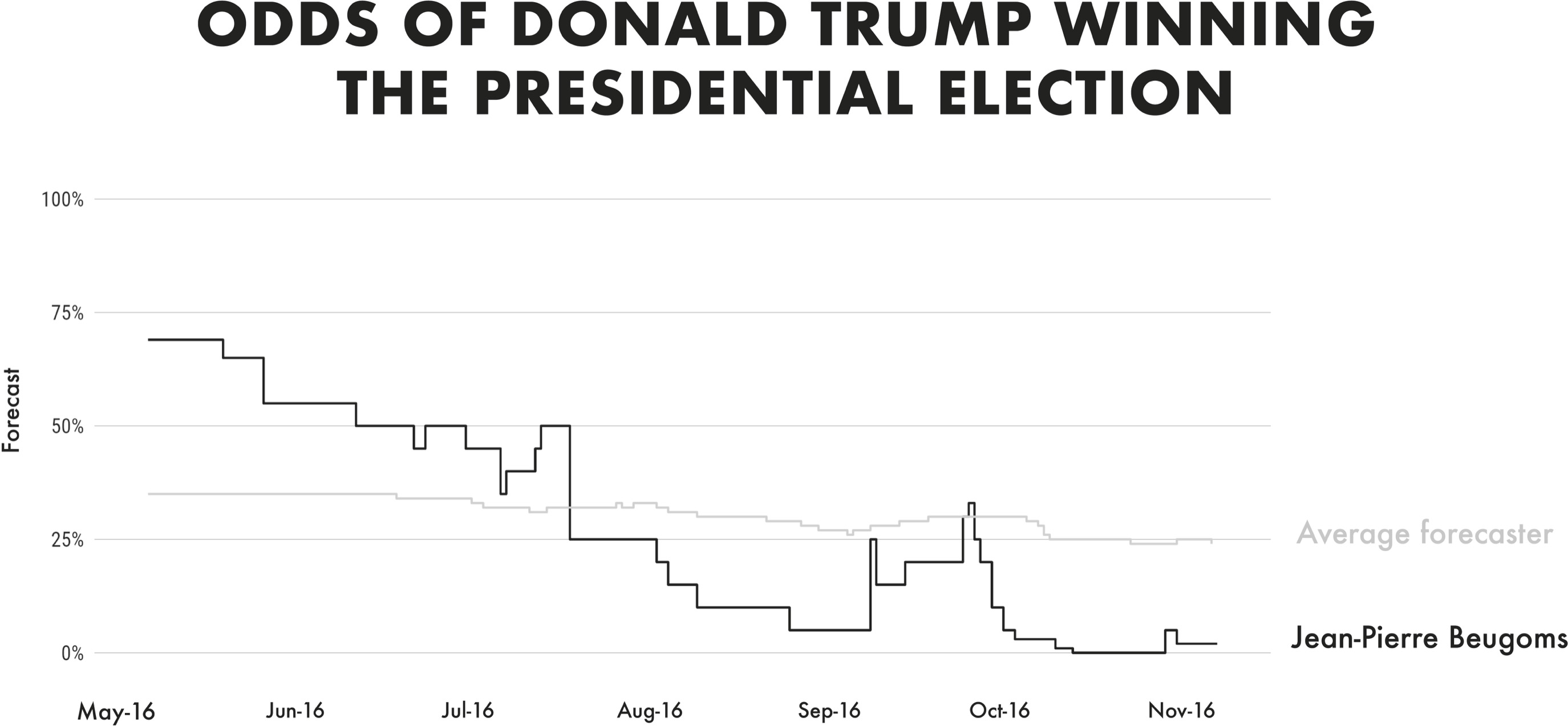
Looking back, Jean-Pierre isn’t defensive about his decision. He freely admits that despite being an experienced forecaster, he made the rookie mistake of falling victim to desirability bias, allowing his preference to cloud his judgment. He focused on the forces that would enable him to predict a Clinton win because he desperately wanted a Trump loss. “That was just a way of me trying to deal with this unpleasant forecast I had issued,” he says. Then he does something unexpected: he laughs at himself.
If we’re insecure, we make fun of others. If we’re comfortable being wrong, we’re not afraid to poke fun at ourselves. Laughing at ourselves reminds us that although we might take our decisions seriously, we don’t have to take ourselves too seriously. Research suggests that the more frequently we make fun of ourselves, the happier we tend to be.* Instead of beating ourselves up about our mistakes, we can turn some of our past misconceptions into sources of present amusement.
Being wrong won’t always be joyful. The path to embracing mistakes is full of painful moments, and we handle those moments better when we remember they’re essential for progress. But if we can’t learn to find occasional glee in discovering we were wrong, it will be awfully hard to get anything right.
I’ve noticed a paradox in great scientists and superforecasters: the reason they’re so comfortable being wrong is that they’re terrified of being wrong. What sets them apart is the time horizon. They’re determined to reach the correct answer in the long run, and they know that means they have to be open to stumbling, backtracking, and rerouting in the short run. They shun rose-colored glasses in favor of a sturdy mirror. The fear of missing the mark next year is a powerful motivator to get a crystal-clear view of last year’s mistakes. “ People who are right a lot listen a lot, and they change their mind a lot,” Jeff Bezos says. “If you don’t change your mind frequently, you’re going to be wrong a lot.”
Jean-Pierre Beugoms has a favorite trick for catching himself when he’s wrong. When he makes a forecast, he also makes a list of the conditions in which it should hold true—as well as the conditions under which he would change his mind. He explains that this keeps him honest, preventing him from getting attached to a bad prediction.
What forecasters do in tournaments is good practice in life. When you form an opinion, ask yourself what would have to happen to prove it false. Then keep track of your views so you can see when you were right, when you were wrong, and how your thinking has evolved. “I started out just wanting to prove myself,” Jean-Pierre says. “Now I want to improve myself—to see how good I can get.”
It’s one thing to admit to ourselves that we’ve been wrong. It’s another thing to confess that to other people. Even if we manage to overthrow our inner dictator, we run the risk of facing outer ridicule. In some cases we fear that if others find out we were wrong, it could destroy our reputations. How do people who accept being wrong cope with that?
In the early 1990s, the British physicist Andrew Lyne published a major discovery in the world’s most prestigious science journal. He presented the first evidence that a planet could orbit a neutron star—a star that had exploded into a supernova. Several months later, while preparing to give a presentation at an astronomy conference, he noticed that he hadn’t adjusted for the fact that the Earth moves in an elliptical orbit, not a circular one. He was embarrassingly, horribly wrong. The planet he had discovered didn’t exist.
In front of hundreds of colleagues, Andrew walked onto the ballroom stage and admitted his mistake. When he finished his confession, the room exploded in a standing ovation. One astrophysicist called it “ the most honorable thing I’ve ever seen.”
Andrew Lyne is not alone. Research discussed here suggests that admitting an error can be seen as honesty and a willingness to learn. Scientists may expect reputational damage when they acknowledge that a study failed to replicate, yet in the research described, observers judged acknowledgment more favorably than denial. After all, it doesn’t matter “ whose fault it is that something is broken if it’s your responsibility to fix it,” actor Will Smith has said. “Taking responsibility is taking your power back.”
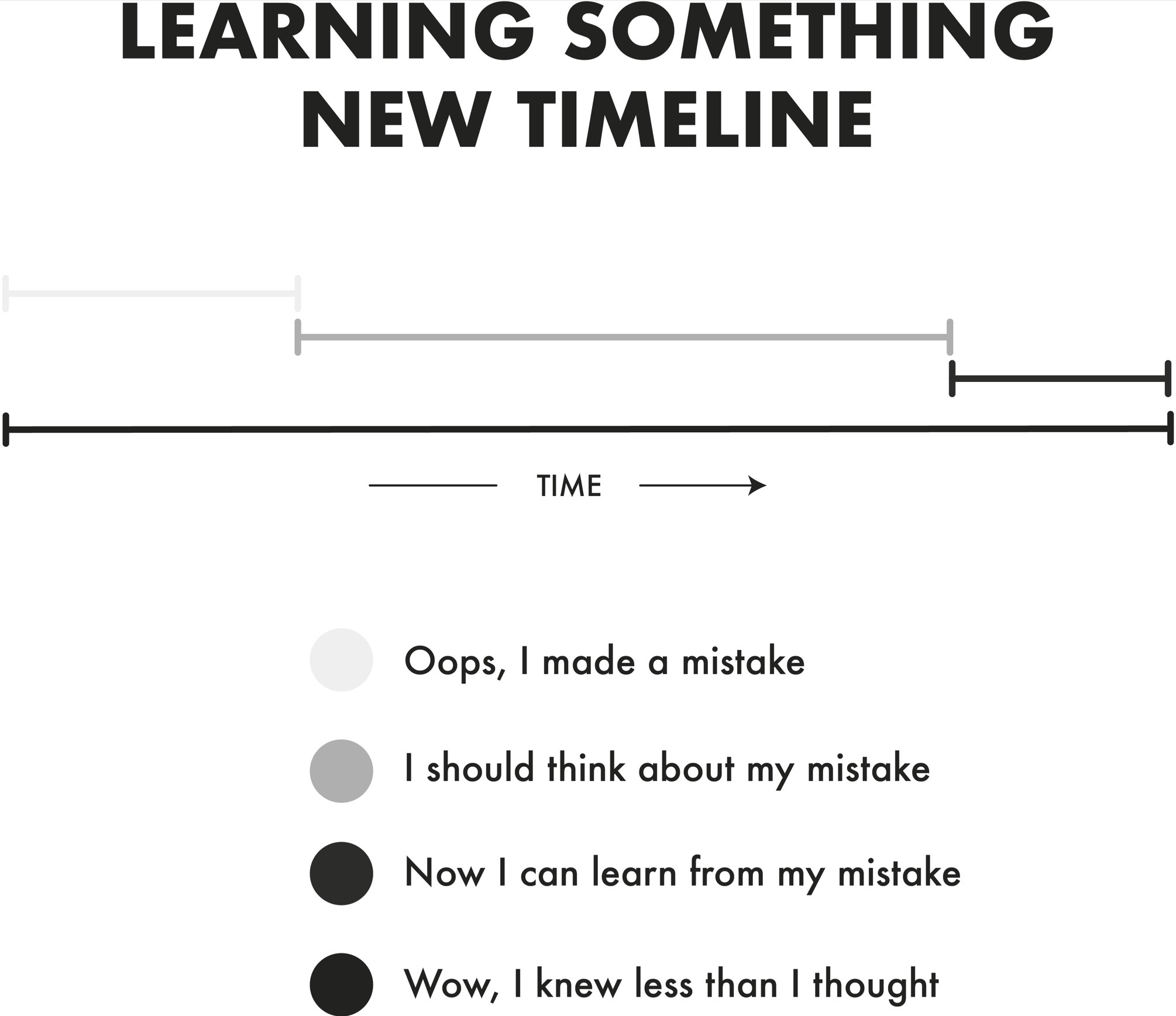
When we find out we might be wrong, a standard defense is “I’m entitled to my opinion.” I’d like to modify that: yes, we’re entitled to hold opinions inside our own heads. If we choose to express them out loud, though, I think it’s our responsibility to ground them in logic and facts, share our reasoning with others, and change our minds when better evidence emerges.
Consider the Harvard students whose worldviews were attacked in an unethical study by Henry Murray. If I had to guess, I’d say the students who enjoyed the experience had a mindset similar to that of great scientists and superforecasters. They saw challenges to their opinions as an exciting opportunity to develop and evolve their thinking. The students who found it stressful didn’t know how to detach. Their opinions were their identities. An assault on their worldviews was a threat to their very sense of self. Their inner dictator rushed in to protect them.
Take it from the student with the code name Lawful. He felt he had been damaged emotionally by the study. “Our adversary in the debate subjected us to various insults,” Lawful reflected four decades later. “ It was a highly unpleasant experience.”
Lawful later became known by a different name: the Unabomber.
Ted Kaczynski became a math professor turned anarchist and domestic terrorist. He mailed bombs that killed three people and injured twenty-three more. An eighteen-year-long FBI investigation culminated in his arrest after The New York Times and The Washington Post published his manifesto and his brother recognized his writing. He was sentenced to life in prison without parole.
Kaczynski’s manifesto is striking for its level of conviction. Kaczynski displays little consideration of alternative views, barely a hint that he might be wrong. Consider just the opening:
The Industrial Revolution and its consequences have been a disaster for the human race. . . . They have destabilized society, have made life unfulfilling. . . . The continued development of technology will worsen the situation. It will certainly subject human beings to greater indignities and inflict greater damage on the natural world. . . . If the system survives, the consequences will be inevitable: There is no way of reforming or modifying the system. . . .
Kaczynski’s case leaves many questions unanswered. I wonder whether learning to question his opinions might have changed his course. That is speculation, however; the rigidity of his writing does not establish what caused his violence or what would have prevented it.
Every time we encounter new information, we have a choice. We can attach our opinions to our identities and stand our ground in the stubbornness of preaching and prosecuting. Or we can operate more like scientists, defining ourselves as people committed to the pursuit of truth—even if it means proving our own views wrong.
When to use it
A business leader evaluating a new product launch should list the assumptions underlying the decision and identify what evidence would cause a pivot.
A political analyst making election predictions should consciously separate their personal preferences from objective indicators.
A scientist designing an experiment should anticipate potential flaws and be ready to admit if results contradict their hypothesis.
In personal relationships, when disagreeing with a partner, one can practice detaching opinions from identity and seek truth together.
FROM THEORY TO EVERYDAY LIFE
In practice
Jean-Pierre's Trump Prediction
Jean-Pierre, an experienced forecaster, initially predicted a Trump victory in 2016 based on media coverage but later changed his forecast to Clinton because he wanted Trump to lose. He admitted he fell victim to desirability bias, allowing his preference to cloud his judgment.
Andrew Lyne's Confession
Physicist Andrew Lyne published evidence of a planet orbiting a neutron star in a prestigious journal but later discovered he had made an Earth orbital correction error. He publicly admitted his mistake at a conference and received a standing ovation, demonstrating that admitting error can be honorable.
The Unabomber's Certainty
Grant contrasts the certainty in Ted Kaczynski’s manifesto with the willingness of scientists and forecasters to reconsider their views. The contrast illustrates his argument about rigidity; it does not establish why Kaczynski became violent.
A MOMENT TO REFLECT
Put it to work.
When making an important forecast, what conditions would have to happen for you to change your mind?
Think of a time you were wrong about something significant. How did you respond? Did you attach your opinion to your identity?
How can you create a habit of tracking your views and updating them when new evidence emerges, like superforecasters do?
Often confused with
CONTINUE THE CONVERSATION
Source texts
- Think Again The Power of Knowing What You Dont Know (Adam Grant)