The Cognitive Dissonance Model
Cognitive dissonance is the mental discomfort experienced when actions contradict beliefs, often leading to self-justification rather than acknowledgment of error.
THE IDEA
THE COGNITIVE DISSONANCE MODEL
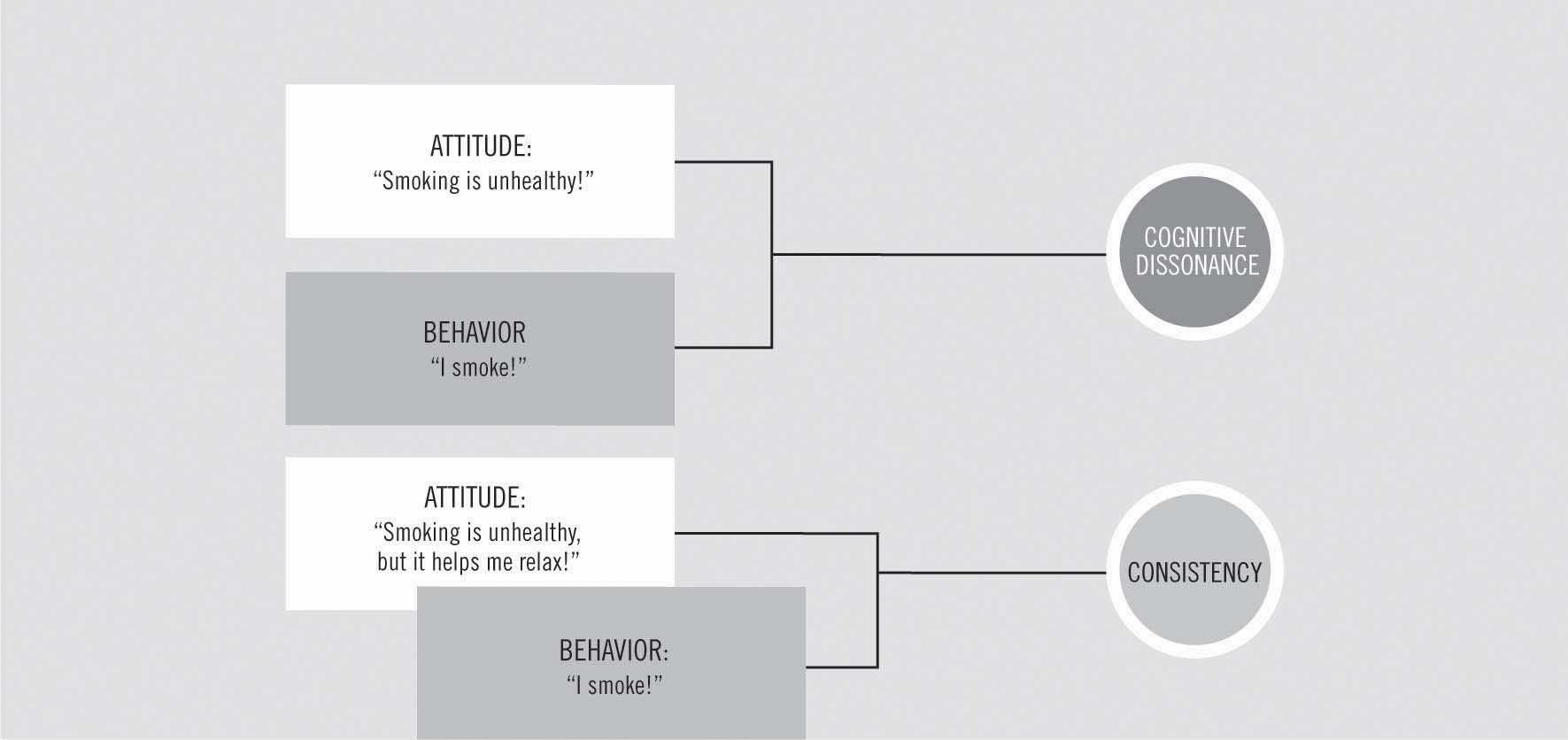
WHY PEOPLE SMOKE WHEN THEY KNOW IT’S UNHEALTHY
There is often a big gap between what we think and what we do: when we do something despite knowing it to be immoral, wrong or stupid, we have a bad conscience. The psychologist Leon Festinger used the term "cognitive dissonance" to describe our state of mind when our actions are not consistent with our beliefs – for example, when we make a decision that proves to be wrong, but we don’t want to admit it.
Self-justification can reduce this discomfort. We may seek arguments that support our actions and discount evidence against them, protecting our view of ourselves while leaving the original problem unresolved.
Dissonance can be reduced by changing behavior or changing a belief or attitude. Feeling less discomfort does not by itself show that the underlying decision was sound.
A great nation is like a great man: when he makes a mistake, he realizes it. Having realized it, he admits it. Having admitted it, he corrects it. He considers those who point out his faults as his most benevolent teachers. Lao Tzu
When to use it
A manager who makes a poor hiring decision may justify it by focusing on the employee's minor strengths rather than admitting the mistake.
In advertising, creating cognitive dissonance can lead consumers to change attitudes or purchase products to align with a desired self-image.
In therapy, recognizing cognitive dissonance helps clients identify discrepancies between values and actions, prompting behavior change.
In education, students may justify poor study habits by downplaying the importance of grades, reducing dissonance instead of improving habits.
FROM THEORY TO EVERYDAY LIFE
In practice
Smoking Despite Health Warnings
People continue to smoke knowing it is unhealthy, causing cognitive dissonance that they reduce by self-justification (e.g., 'I'll quit tomorrow' or 'It's not that bad').
Wrong Decision Defended
After making a poor investment, an investor may ignore negative feedback and focus on minor positive aspects to avoid admitting the mistake.
A MOMENT TO REFLECT
Put it to work.
When were you last aware of a cognitive dissonance in yourself? And when in your partner?
How do you usually reduce cognitive dissonance: by changing your behavior or by changing your attitude?
References
- A Theory of Cognitive Dissonance — Leon Festinger (1957)
CONTINUE THE CONVERSATION
Source texts
- The Decision Book Fifty Models for Strategic Thinking