Using Wikipedia to “Read the Scholarly Room”
A heuristic for quickly understanding the landscape of scholarly debate on a topic by scanning Wikipedia's summary of key positions, using the example of the atomic bomb debate to illustrate how to evaluate the strength of a claim relative to the consensus.
THE IDEA
Using Wikipedia to “Read the Scholarly Room”
Wikipedia is an indispensable resource for reading the room when you’re still finding your way into a topic and don’t know who the players are, the differences that separate them, and the big issues still under debate. For example, you’ve heard that near the end of World War II there was a lot of controversy around the decision to drop the atomic bomb. When you google “Atomic bomb + debate,” this article comes up.
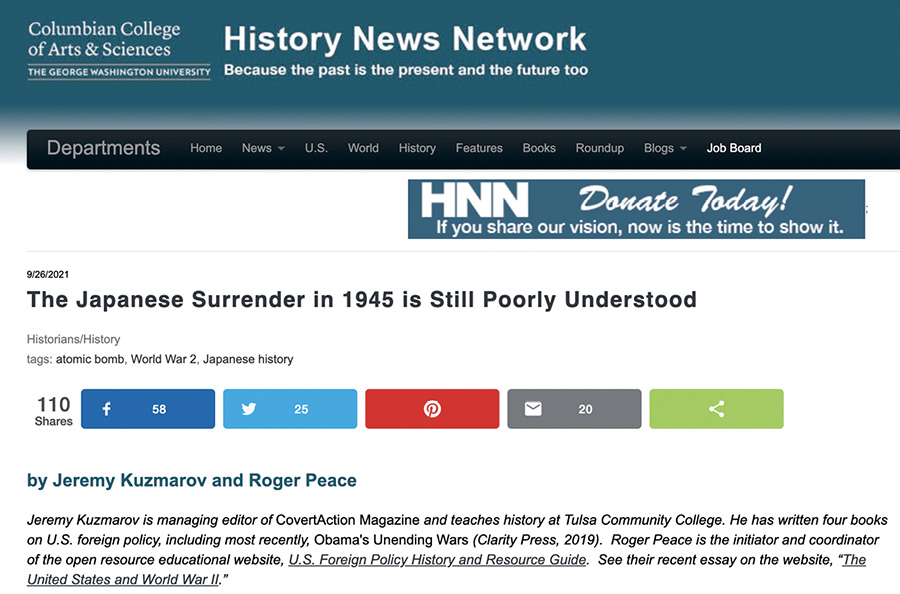
Figure 7.10 Article from the website of the History News Network (https://historynewsnetwork.org/article/181372)
It appears on historynewsnetwork.org, a site for history buffs out of the College of Arts and Sciences at George Washington University. The authors argue that when the bombs were dropped, the Japanese were already on the “verge of defeat.” Surrender, claim authors Jeremy Kuzmarov and Roger Peace, “could likely have been achieved without the atomic bomb.”17
A bold claim that, if true, could have prevented untold human suffering. It’s not quite what you remember from your history books. Then again, textbooks lag years—sometimes decades—behind the latest scholarship. Is this what the latest research says? Would a room full of historians nod in unison?
Wikipedia’s entry on the “Atomic Bombings of Hiroshima and Nagasaki” is long—excruciatingly long. It runs thirty-seven pages, with a five-page bibliography and over 350 references. It’s easy to get lost. Since our goal is to read the room, not immerse ourselves in every detail, we do a quick scan of the table of contents. Near the end, we spy a subsection called “Debate over the Bombings.” It’s blissfully short. Two paragraphs.
The first sentence hints that things are, well, let’s just say a bit more complicated than authors Kuzmarov and Peace let on. The role of the bombings, according to Wikipedia, is “the subject of scholarly and popular debate.”18
The short section lays out three positions:
- 1 The atomic bomb was responsible for bringing the war to a swift end. Had the Allies attempted a land invasion, there would have been an even greater loss of life among the Allies as well as the Japanese defending their homeland.
- 2 It wasn’t the bomb that brought Japan to its knees but the Soviets’ declaration of war in August 1945.
- 3 Japan was indeed ready to surrender. The Americans dropped the bombs anyway to intimidate the USSR in what would become the first round of the Cold War.
So how do the claims of Kuzmarov and Peace fare? Their position is not beyond the pale—it’s not “fringe.” On the other hand, it’s by no means universally accepted. It’s one position among several in an ongoing historical debate.
When to use it
When researching a controversial historical event to quickly grasp the spectrum of scholarly opinion.
When entering a new academic field and needing to identify key debates and researchers.
When evaluating a news article or opinion piece that makes a bold claim about a contested topic.
When preparing for a debate or paper to understand the range of arguments and evidence.
FROM THEORY TO EVERYDAY LIFE
In practice
Evaluating the Atomic Bomb Debate Using Wikipedia
When researching the controversy over dropping the atomic bomb, a Google search leads to a History News Network article claiming Japan was already on the verge of defeat. To assess this claim, one can turn to Wikipedia's entry on 'Atomic Bombings of Hiroshima and Nagasaki', which includes a short subsection 'Debate over the Bombings' outlining three positions: (1) the bomb ended the war quickly; (2) the Soviet declaration of war was key; (3) Japan was ready to surrender and the bombs were used to intimidate the USSR. This shows that the article's claim is not fringe but one of several debated positions.
A MOMENT TO REFLECT
Put it to work.
How can you use Wikipedia to identify the main positions in a scholarly debate?
What are the limitations of relying solely on a Wikipedia summary to 'read the room'?
When evaluating a controversial claim, how do you determine if it's a mainstream or fringe position using this heuristic?
CONTINUE THE CONVERSATION
Source texts
- Verified How to Think Straight, Get Duped Less, and Make Better Decisions about What to Believe Online (Mike Caulfield, Sam Wineburg)