Thematic Analysis – Utilising RCA for Insights at an Organisational Level
Root Cause Analysis (RCA) can be scaled to an organizational level to identify system-wide improvements, share good practices, and create consistency across processes. This thematic approach helps reveal cross-functional themes and supports sustained improvements.
THE IDEA
Thematic Analysis – Utilising RCA for Insights at an Organisational Level
Stakeholders are more likely to sustain root cause analysis (RCA) improvements when they can see results, for example:
- Where processes and systems run more smoothly or projects deliver more reliably.
- Where there is evidence (which might be a combination of objective and subjective data points) that RCA improvements in specific areas have ‘headed problems off at the pass’ (e.g. in cyber security or project delivery).
- Where there is a sense that RCA and systems thinking are highlighting ‘system‐wide’, cross‐functional improvements. Diagram B.3 illustrates a ‘what’ and ‘why’ analysis that can reveal themes to be worked on.
Initiatives I have seen at an organisation‐wide (or regional or divisional) level have included:
- Improving data and information quality.
- Use a balanced scorecard with key performance indicators (KPIs) and key risk indicators (KRIs).
- Clarify how metrics, issues, incidents, and near misses are filtered and reported upwards. Identify questions that need a quick decision, such as who is accountable for an emerging risk.
- Accountability mapping for the executive team and their direct reports (i.e. who oversees the quality of business continuity plans for critical areas).
- Frameworks determining the way processes and policies are written, approved and ‘joined up’ with other activities (including policy streamlining and establishing key control objectives across the organisation).
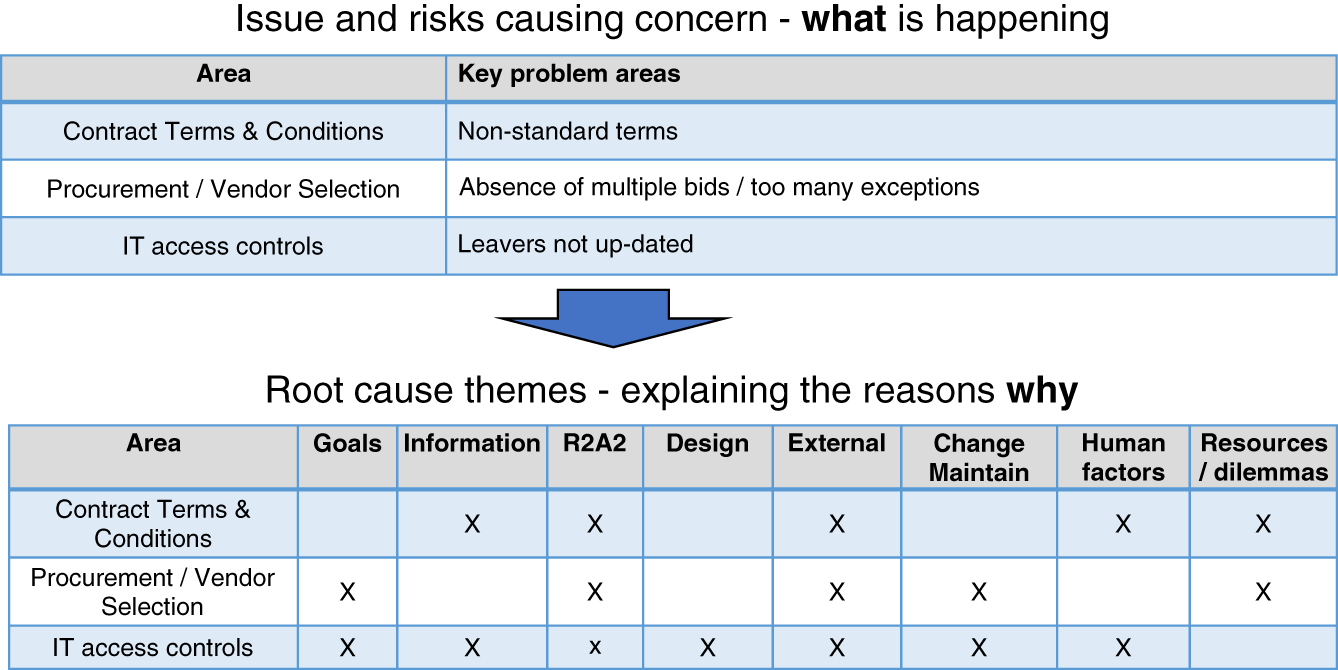
Diagram B.3 A new type of thematic analysis
- More good practice sharing around the management of third parties and more scenario planning around forecasts.
- Improving the management of human factors, including reviewing training and development, asking participants whether training reflects their work, and using authorised security tests or mystery customer exercises to reveal behavioural risks.10
- Change incentive and bonus schemes to reflect risk and control requirements.
- More clarity on staffing baselines and productivity measures – as someone said to me recently, ‘If the knights on horseback are off to war, you need a good team behind the scenes, ensuring they are fed, watered and looked after. Success only comes through a team effort’.
How you group causes also matters. Bruce Sherry, identified here as Senior Audit Manager at Tesco Bank, explains:
‘Of course, with RCA, you will always have the specific facts of what you have found. That's always central. But when it comes to categorising cause types for thematic analysis, you must get the balance right around the number of categories you use. If you have a team who like detail, it's understandable that you might want to break down causes into particular cause types. But the more I have worked with this over the years, the more I can see that people can get drawn to specific cause types based on their background and personal preferences, and so it's entirely possible to ‘lose the wood for the trees’. I think for many teams, a high‐level categorisation of cause types is best until you are very confident categorisation is being done effectively and consistently.’
Thematic analysis brings findings from separate investigations together. Lessons from one area can then inform work elsewhere, and recurring gaps can become priorities for organisation‐wide changes.
When to use it
An organization notices recurring issues with data quality across projects. Thematic RCA reveals systemic problems in how metrics are defined and reported, leading to a balanced scorecard implementation.
A company's executive team lacks clarity on accountability for business continuity plans. Thematic analysis maps ownership and improves cross-functional coordination.
After a series of security breaches, an organization uses thematic RCA to uncover human factors. Training is revamped with realistic simulations, and incentive schemes are aligned to risk behaviors.
A large organization finds that third-party management is inconsistent. Thematic analysis identifies good practices and facilitates scenario planning, leading to more robust vendor oversight.
FROM THEORY TO EVERYDAY LIFE
In practice
Improving Data Quality with Balanced Scorecard
An organization uses thematic RCA to improve data and information quality. They implement a balanced scorecard approach with KPIs and KRIs, clarify how metrics are filtered and reported upward, and fast-track questions about emerging risks to the accountable person.
Accountability Mapping for Executive Team
An organisation uses thematic analysis to map accountability for its business continuity plans. The map names who oversees plan quality in each critical area, making gaps and overlaps easier to discuss.
Managing Human Factors in Training
An organization overhauls training and development based on RCA themes. They test realism through ethical hacking and mystery customers, revealing behavioral risks. Incentive schemes are adjusted to reflect risk and control requirements.
A MOMENT TO REFLECT
Put it to work.
How can you use thematic analysis to identify common root causes across different departments in your organization?
What is the right level of categorization for cause types to avoid 'losing the wood for the trees'?
How can you ensure that insights from RCA in one area are rapidly shared and adopted in other areas?
CONTINUE THE CONVERSATION
Source texts
- Beyond the Five Whys Root Cause Analysis and Systems Thinking (James C. Paterson)