The Strength of Weak Opinions
Acknowledging uncertainty and genuine weaknesses can make a discussion more open and credible. Grant argues for expressing the confidence you can support, considering an opponent’s strongest case, and focusing on a few good reasons rather than overstating your position.
THE IDEA
THE STRENGTH OF WEAK OPINIONS
When we hit a brick wall in a debate, we don’t have to stop talking altogether. “Let’s agree to disagree” shouldn’t end a discussion. It should start a new conversation, with a focus on understanding and learning rather than arguing and persuading. That’s what we’d do in scientist mode: take the long view and ask how we could have handled the debate more effectively. Doing so might land us in a better position to make the same case to a different person—or to make a different case to the same person on a different day.
When I asked a Wall Street executive for advice on how to approach debates differently in the future, he suggested expressing less conviction. I could easily have countered that I was uncertain about which of my twenty-six recommendations might be relevant. I could also have conceded that although money didn’t usually solve the problem, I’d never seen anyone test the effect of million-dollar retention bonuses. That would be a fun experiment to run, don’t you think?
A few years ago, I argued in my book Originals that if we want to fight groupthink, it helps to have “strong opinions, weakly held.” Since then I’ve changed my mind—I now believe that’s a mistake. If we hold an opinion weakly, expressing it strongly can backfire. Communicating it with some uncertainty signals confident humility, invites curiosity, and leads to a more nuanced discussion. Research shows that in courtrooms, expert witnesses and deliberating jurors are more credible and more persuasive when they express moderate confidence, rather than high or low confidence.* And these principles aren’t limited to debates—they apply in a wide range of situations where we’re advocating for our beliefs or even for ourselves.
In 2014, a young woman named Michele Hansen came across a job opening for a product manager at an investment company. She was excited about the position but she wasn’t qualified for it: she had no background in finance and lacked the required number of years of experience. If you were in her shoes and you decided to go for it, what would you say in your cover letter?
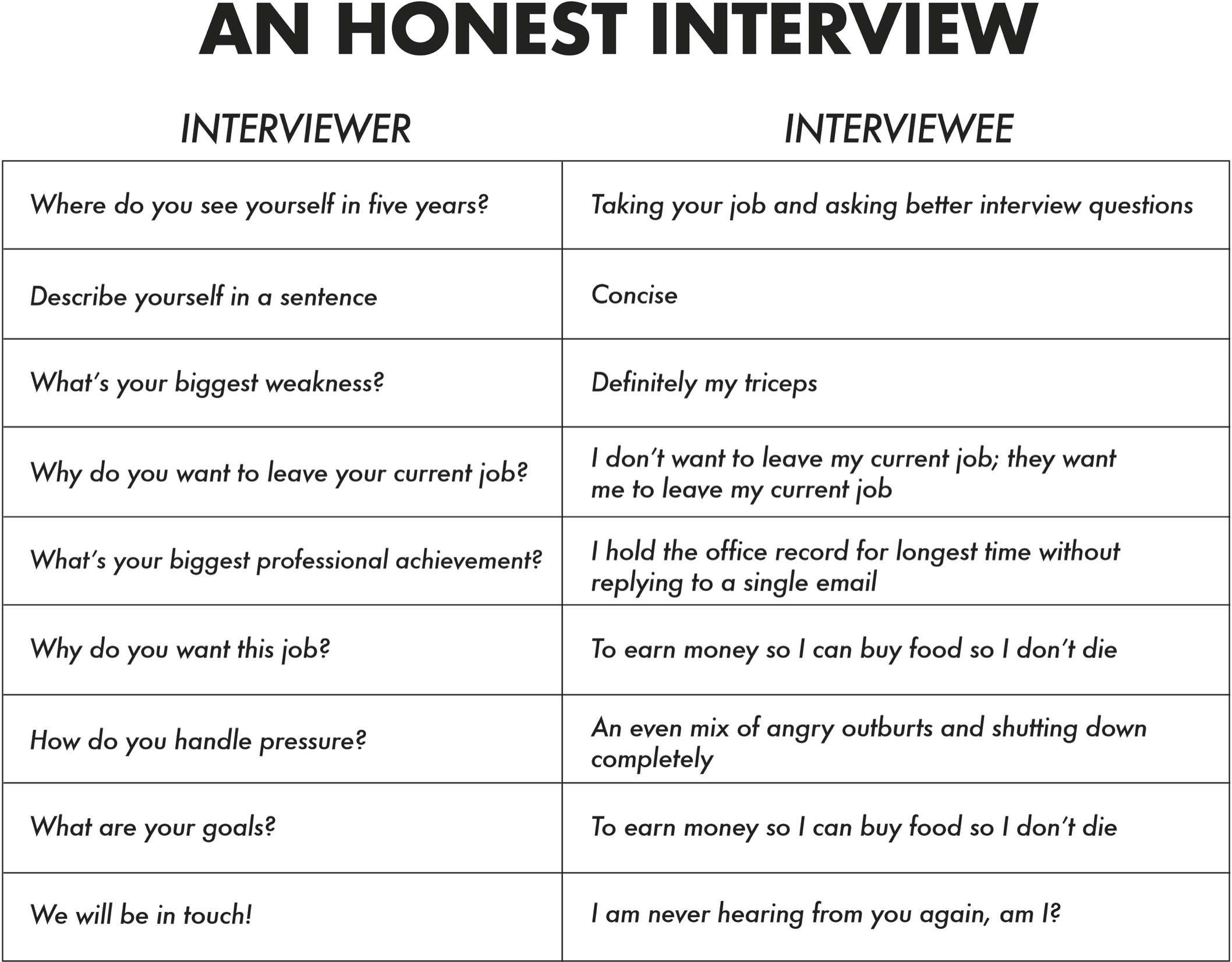
The natural starting point would be to emphasize your strengths and downplay your weaknesses. As Michael Scott deadpanned on The Office, “I work too hard, I care too much, and sometimes I can be too invested in my job.” But Michele Hansen did the opposite, taking a page out of the George Costanza playbook on Seinfeld: “My name is George. I’m unemployed and I live with my parents.” Rather than trying to hide her shortcomings, Michele opened with them. “I’m probably not the candidate you’ve been envisioning,” her cover letter began. “I don’t have a decade of experience as a Product Manager nor am I a Certified Financial Planner.” After establishing the drawbacks of her case, she emphasized a few reasons to hire her anyway:
But what I do have are skills that can’t be taught. I take ownership of projects far beyond my pay grade and what is in my defined scope of responsibilities. I don’t wait for people to tell me what to do and go seek for myself what needs to be done. I invest myself deeply in my projects and it shows in everything I do, from my projects at work to my projects that I undertake on my own time at night. I’m entrepreneurial, I get things done, and I know I would make an excellent right hand for the co-founder leading this project. I love breaking new ground and starting with a blank slate. (And any of my previous bosses would be able to attest to these traits.)
A week later a recruiter contacted her for a phone screen, and then she had another phone screen with the team. On the calls, she asked about experiments they’d run recently that had surprised them. The question itself surprised the team—they ended up talking about times when they were sure they were right but were later proven wrong. Michele got the job, thrived, and was promoted to lead product development. This success isn’t unique to her: there’s evidence that people are more interested in hiring candidates who acknowledge legitimate weaknesses as opposed to bragging or humblebragging.
Even after recognizing that she was fighting an uphill battle, Michele didn’t go on defense or offense. She didn’t preach her qualifications or prosecute the problems with the job description. By agreeing with the argument against her in her cover letter, she preempted knee-jerk rejection, demonstrating that she was self-aware enough to discern her shortcomings and secure enough to admit them.
An informed audience is going to spot the holes in our case anyway. We might as well get credit for having the humility to look for them, the foresight to spot them, and the integrity to acknowledge them. By emphasizing a small number of core strengths, Michele avoided argument dilution, focusing attention on her strongest points. And by showing curiosity about times the team had been wrong, she may have motivated them to rethink their criteria. They realized that they weren’t looking for a set of skills and credentials—they were looking to hire a human being with the motivation and ability to learn. Michele knew what she didn’t know and had the confidence to admit it, which sent a clear signal that she could learn what she needed to know.
By asking questions rather than thinking for the audience, we invite them to join us as a partner and think for themselves. If we approach an argument as a war, there will be winners and losers. If we see it more as a dance, we can begin to choreograph a way forward. By considering the strongest version of an opponent’s perspective and limiting our responses to our few best steps, we have a better chance of finding a rhythm.
When to use it
Job applications where you don't meet all qualifications: lead with honesty about gaps, then highlight unique strengths.
Presenting a new strategy to a skeptical audience: frame it as a hypothesis and invite feedback rather than asserting it as the only solution.
In a negotiation, state how confident you are and explain where uncertainty leaves room to consider alternatives.
When giving feedback to a colleague, acknowledge relevant limits in your knowledge so there is room for them to clarify or disagree.
FROM THEORY TO EVERYDAY LIFE
In practice
An Executive's Advice on Debates
After a debate, a Wall Street executive advised Grant to express less conviction. Grant reflects that he could have acknowledged uncertainty about which recommendations were relevant and suggested testing the effect of million-dollar retention bonuses.
Michele Hansen's Cover Letter
Michele Hansen applied for a product manager job despite lacking qualifications. In her cover letter, she opened by acknowledging her shortcomings ('I’m probably not the candidate you’ve been envisioning') and then highlighted her core strengths like ownership, entrepreneurship, and ability to learn. She also asked about experiments that surprised the team. She got the job and was promoted.
A MOMENT TO REFLECT
Put it to work.
Think of a time you held a strong opinion but expressed it with uncertainty. How did the other person react? How might the outcome have differed if you had expressed it with high confidence?
In a professional setting, you are about to present a proposal that has clear weaknesses. How can you acknowledge those weaknesses upfront to build credibility and invite collaboration?
When you are arguing with someone, how can you shift from a 'war' mindset to a 'dance' mindset? What questions can you ask to understand their perspective better?
Often confused with
CONTINUE THE CONVERSATION
Source texts
- Think Again The Power of Knowing What You Dont Know (Adam Grant)