The Modified Fishbone Diagram: Eight Ways of Understanding Why
A structured root cause analysis framework that expands the traditional fishbone diagram into eight categories: strategy, data, roles, design, external factors, execution, human factors, and resources. It helps uncover systemic reasons behind setbacks and recurring problems.
THE IDEA
The Modified Fishbone Diagram: Eight Ways of Understanding Why
These ‘eight ways of understanding why’ structure a fishbone diagram around questions about how a problem arose. They draw on several root cause analysis techniques and on the author’s work with clients.
The eight ways will be discussed in more detail, with practical examples, in Section 2, but in overview the eight ways focus on:
- Whether strategies and goals were appropriately set, understanding key risks, and recognising what might be a tolerable setback;6
- Whether there was timely, accurate data, information and communications, to be able to see if things are going as planned or starting to go off track;
- Whether roles, responsibilities, accountabilities and authorities (R2A2) were set appropriately so there are no gaps in who does what and who makes decisions;
- Whether there was a suitable design – of facilities, buildings, structures, equipment, systems, policies, protocols, procedures, reward and recognition, etc. – e.g. if you want to build a tall structure, you need a design, or a plan, that factors in the loads and stresses it will be subject to;
- Whether external factors were identified and appropriately accommodated, recognising these might knock things off track;
- Whether building, maintenance and change were effectively executed; this could be of structures, systems, policies, etc. Because even if a design is good, shoddy building, poor maintenance or repairs can be a precursor to problems;
- Whether human factors were adequately considered; because if you want to fly to the moon, you need people with ‘the right stuff’, but even then, they will need to work as an effective team (both in the spacecraft and at ground control);
- Whether resources, priorities and dilemmas were properly understood and worked through.
The eight ways of understanding why can be set out in a ‘modified fishbone diagram’ – see Diagram 2.2.
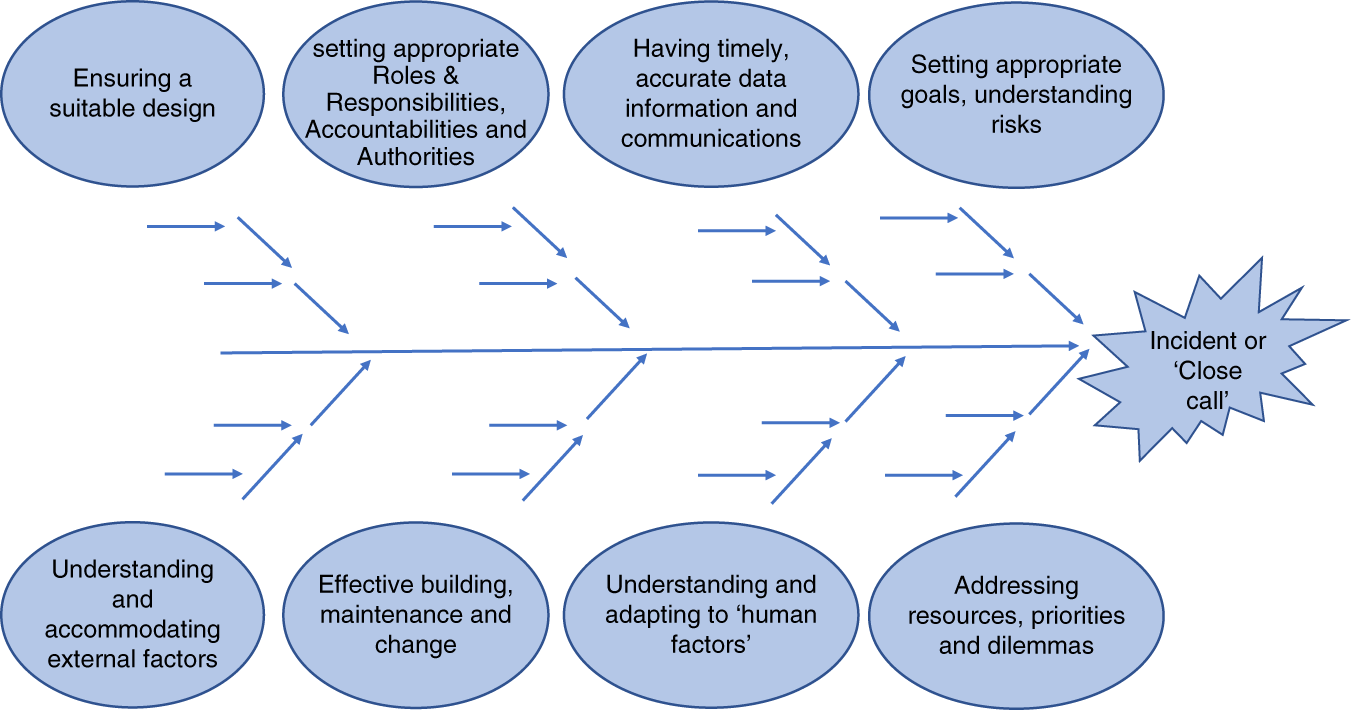
Diagram 2.2 Eight ways to understand why: a modified fishbone diagram
So, if a project isn't going to plan, we can ask ‘why’ in different ways: e.g. ‘Is the project timeline and budget realistic?’ and ‘Are there adequate “early warning signs”?’ or ‘Are there issues with resourcing, etc.?’ and, depending on the facts, start to unpick what has been going on and why.
The eight ways are not intended as a definitive RCA framework. In my work with clients, they help people look beyond a single cause and examine connections: a design decision may affect maintenance, or unclear authority may prevent a warning from reaching someone who can act. Those connections are what make a problem systemic.
When to use it
Investigating why a product launch was delayed and identifying actionable improvements.
Analyzing a budget overrun in a construction project to uncover both immediate and systemic causes.
Diagnosing why a marketing campaign underperformed, considering strategy, data, roles, and external factors.
Reviewing a safety incident in a manufacturing plant to ensure all contributing factors are captured.
FROM THEORY TO EVERYDAY LIFE
In practice
Project Delay Analysis
A software development project is falling behind schedule. Using the eight ways, the team investigates: whether the timeline and budget were realistic (way 1), whether progress data was communicated (way 2), whether roles and decision-making were clear (way 3), whether the technical design was appropriate (way 4), whether external vendor dependencies were managed (way 5), whether code was built and tested properly (way 6), whether the team had the right skills and collaborated effectively (way 7), and whether resources were balanced across priorities (way 8). This reveals that unclear responsibilities (way 3) and inadequate early warnings (way 2) were the primary causes.
Manufacturing Defect Investigation
A factory experiences recurring quality defects. Applying the eight ways: check if production targets were set with risk awareness (1), if defect data was tracked and reported (2), if quality control roles were defined (3), if the equipment design was suitable (4), if raw material supply issues were anticipated (5), if maintenance was performed on schedule (6), if operators were trained (7), and if resource allocation allowed for sufficient inspection (8). The analysis finds that poor maintenance (6) and lack of training (7) were the root causes.
A MOMENT TO REFLECT
Put it to work.
Think of a recent project that encountered a setback. Which of the eight ways were most overlooked, and how might addressing them have changed the outcome?
Consider a recurring problem in your organization. How could the eight-way analysis reveal systemic connections between categories that you hadn't noticed before?
Pick one of the eight ways and identify a situation where it was the primary cause of failure. What evidence would you look for to confirm that?
CONTINUE THE CONVERSATION
Source texts
- Beyond the Five Whys Root Cause Analysis and Systems Thinking (James C. Paterson)