The Eisenhower Matrix
The Eisenhower Matrix is a time management tool that helps distinguish between what is important and what is urgent, enabling better prioritization of tasks.
THE IDEA
The Eisenhower Matrix
The US president Dwight D. Eisenhower supposedly once said: “The most urgent decisions are rarely the most important ones.” The matrix distinguishes between what is important and what is urgent so you can decide which tasks need immediate action and which need scheduled attention.
Whatever the job that lands on your desk, begin by breaking it down according to the Eisenhower method and then decide how to proceed. We often focus too strongly on the “urgent and important” field, on the things that have to be dealt with immediately. Ask yourself: When will I deal with the things that are important, but not urgent? When will I take the time to deal with important tasks before they become urgent? This is the field for strategic, long-term decisions.
Another method of organizing your time better is attributed to the multimillionaire Warren Buffett. Make a list of everything you want to get done today. Begin with the task at the top of the list, and continue only when you have completed it. When a task has been completed, cross it off the list.
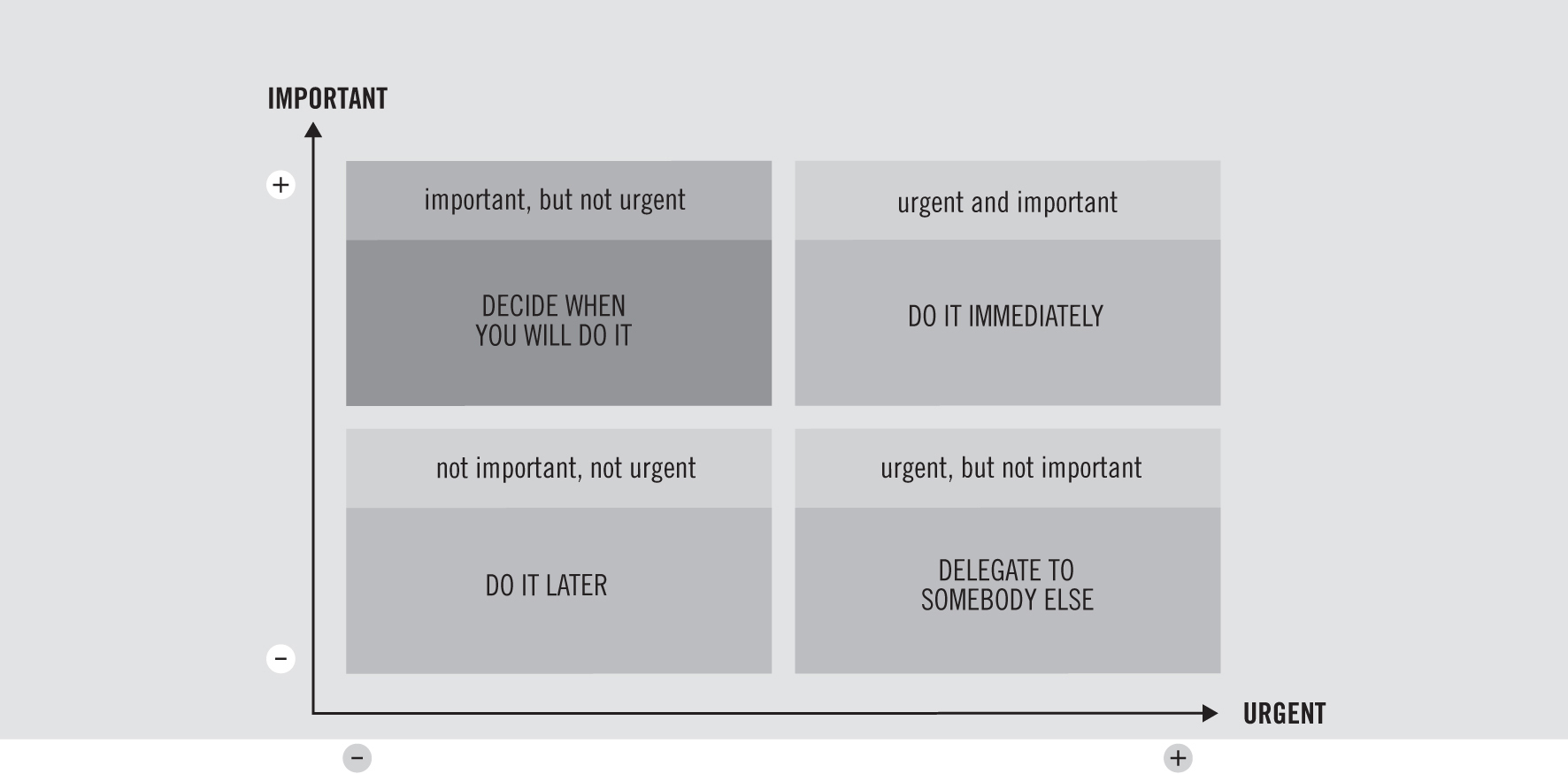
Fill in the tasks you currently have to deal with.
When to use it
Prioritizing daily work tasks to improve efficiency and reduce stress.
Planning long-term projects by identifying important but non-urgent steps.
Delegating low-priority tasks in a team setting to maintain focus on high-impact work.
Improving personal time management habits by regularly reviewing task lists through the matrix.
FROM THEORY TO EVERYDAY LIFE
In practice
Applying the matrix to daily tasks
A project deadline due tomorrow is both urgent and important (Quadrant 1). Planning a long-term strategy for next quarter is important but not urgent (Quadrant 2). Answering a non-essential email is urgent but not important (Quadrant 3), so it should be delegated. Browsing social media is neither urgent nor important (Quadrant 4) and can be eliminated.
Using the matrix to reduce stress
If you constantly feel overwhelmed, identify tasks that are urgent but not important (Quadrant 3) and delegate or defer them. Focus your energy on Quadrant 2 (important but not urgent) to prevent future crises.
A MOMENT TO REFLECT
Put it to work.
When will I deal with the things that are important, but not urgent?
What tasks can I delegate or eliminate to free up time for strategic work?
How can I structure my day to minimize the number of urgent tasks?
CONTINUE THE CONVERSATION
Source texts
- The Decision Book Fifty Models for Strategic Thinking