Strategy in the Ordered Domains
The Cynefin authors critique strategic planning that treats the future as knowable, defines an ideal outcome, and manages a path toward it. They associate this approach with ordered domains and contrast it with planning under greater uncertainty.
THE IDEA
Strategy in the Ordered Domains
The dominant paradigm for management thinking over the last 50 years has been Systems Dynamics. Systems dynamics (sometimes called systems thinking) uses a mechanical metaphor to treat the organization as a machine. We see this in the language that is used in strategies that are based on systems dynamics. ‘Levers for change’, ‘drivers for growth’, ‘alignment’, ‘optimization’ etc.
Systems dynamics assume that most of our strategic landscape is known or knowable – through analysis, and that the future will unfold in a predictable or manageable way.
Strategic Planning based on a systems dynamics approach takes the following form:
We assume that the future is known and create the best-imagined future. Then we find a path toward that idealized future. We are certain of our place in the strategic environment and confident in our ability to predict changes. Implementing the plan is a matter of managing resource allocation over time.
The manager’s job is to ensure we are on the right path and lead with a command and control mindset. We know this process as Strategy Implementation – the strategy as a separate task from strategy development. Risk management concerns itself with identifying, evaluating, and prioritizing known risks to the strategic direction. Innovation is also a separate process that feeds ideas into the plan.
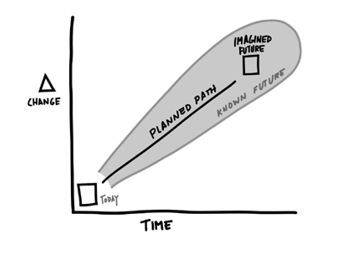
Figure 4. A planned path to a known future
When to use it
Creating an annual operating plan for a company in a stable, mature industry with predictable demand.
Managing a large infrastructure project with fixed specifications and milestones.
Developing a risk register for known threats like currency fluctuations or supplier disruptions.
Implementing a balanced scorecard to track performance against strategic objectives.
FROM THEORY TO EVERYDAY LIFE
In practice
Corporate 5-Year Strategic Plan
A corporation adopts a traditional strategic planning process: it forecasts market growth, sets revenue and profit targets, defines key initiatives, and allocates budgets annually. The plan is monitored through quarterly reviews, adjusting resources to stay on course. This illustrates the planning approach criticized here: resource decisions rely heavily on a forecast and a defined path toward a target.
A MOMENT TO REFLECT
Put it to work.
How might an over-reliance on systems dynamics create blind spots when the competitive environment becomes volatile or unprecedented?
In your organization, what assumptions about predictability are embedded in the strategic planning process?
Can you identify a past strategic failure that resulted from treating an uncertain future as knowable?
CONTINUE THE CONVERSATION
Source texts
- Cynefin - Weaving Sense-Making into the Fabric of Our World ED02 (Dave Snowden Sonja Blignaut Zhen Goh)