Strategy in the Complex Domain
In complex domains, strategy shifts from clear planning to exploratory experiments with fast feedback, where leaders set direction and manage tempo rather than controlling outcomes.
THE IDEA
Strategy in the Complex domain
“Seeing the world as a ceaselessly complex and adaptive system... involves changing the role we imagine for ourselves... from architects of a system we can control... to gardeners living in a shifting ecosystem that is mostly out of our control.” – Joshua Cooper Ramo (9)
When we are certain about our future, we can establish clear goals and priorities. When we are less certain, strategy becomes a series of exploratory steps designed to explore and learn. We conduct small experiments in parallel, gain fast feedback, and enable rapid exploitation of success. Leaders manage the tempo and the direction of the business as a continuous process.
Implementation is immediate because we take direct action now to understand how we can impact the strategic environment. A leader’s job is to set the direction and enable their people and teams to test and learn based on their direct understanding of the strategic environment.
- Set the direction to travel
- Create the tempo
- Manage the constraints
In a complex domain we set a new ‘mode of operation’ for the organization – strategy shifts from planning and implementation toward moving in the right direction at the right tempo. Risk is managed by taking a broad and diverse perspective, detecting the weak signals of change, and responding quickly. Learning from many small failures is like an immune system for the organization. It provides a signal about where to travel and will often offer guidance about what not to do, or what to do less of.
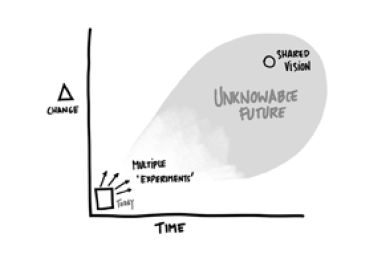
Figure 5. In the Complex domain strategy involves doing multiple small experiments
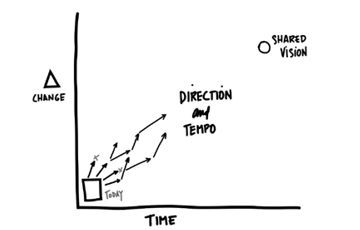
Figure 6. In the complex domain strategy shifts from planning and implementation toward moving in the right direction at the right tempo
When to use it
Developing a new product or service in an uncertain or rapidly changing market
Responding to a competitive threat where the best next move is unclear
Shaping organizational culture when top-down directives are ineffective
Exploring new business models or revenue streams with unknown potential
FROM THEORY TO EVERYDAY LIFE
In practice
Tech startup exploring market fit
A startup with an uncertain value proposition launches multiple small MVPs (minimum viable products) in parallel, each testing a different customer segment or feature set. They gather real-time usage data and adjust based on which experiments show traction, rather than committing to a single plan upfront.
Retail chain testing new store formats
A retail chain wants to innovate store layout. Instead of rolling out one design nationwide, they pilot 5 different layouts across different locations, measure sales and customer satisfaction, then scale the most successful approach while learning from failures in other formats.
A MOMENT TO REFLECT
Put it to work.
What small experiments could you run this week to test a key assumption about your strategy?
How would you describe the ‘direction to travel’ for your team or organization, without prescribing exact steps?
What weak signals of change are you currently ignoring that might be important in a complex environment?
References
- Unknown — Joshua Cooper Ramo
CONTINUE THE CONVERSATION
Source texts
- Cynefin - Weaving Sense-Making into the Fabric of Our World ED02 (Dave Snowden Sonja Blignaut Zhen Goh)