Selecting Appropriate RCA Techniques
Guidance on choosing root cause analysis techniques from simple (e.g., three-way five whys) to advanced systems approaches (e.g., STAMP), emphasizing that no single method is best and each has limitations and trade-offs.
THE IDEA
Selecting Appropriate RCA Techniques
If you are just starting to do RCA in earnest, I would start with either three‐way five whys, the Bowtie or the modified fishbone (with or without causal loops), but always recognise that there will be simplifications and limitations.
As you become more sophisticated in your approach to RCA, a more comprehensive barrier analysis approach, fault tree technique or systems analysis technique may be useful. A summary list, with some indicative, high‐level, pros and cons, is provided in Table B.2.
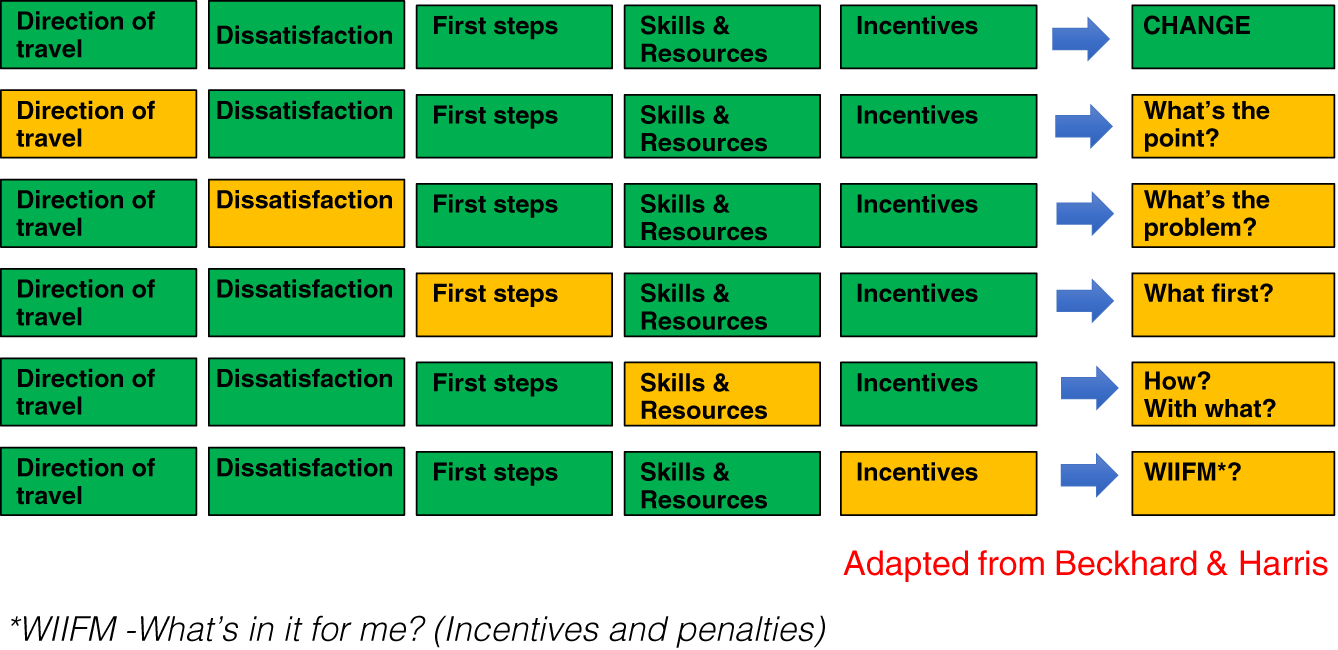
Diagram B.1 Change management – key ingredients
Table B.2 Summary of various RCA tools with potential pros and cons 4
| Technique | Potential pros | Potential cons 5 |
|---|---|---|
| Five whys and two legs | Simple, but not too simple 6, contains prevent and detect | It may miss multiple other causes and does not include systems thinking |
| Three‐way five whys | Simple; contains prevent, detect, and other factors (e.g. recovery, risk identification, or design). Popular with many clients. | Misses the systemic dimension |
| Bowtie | Simple; includes prevention, detection, and recovery. Considers impact and helps assess risks and control design. Can show hairline cracks. | More of an indirect RCA tool; linking RCA data gathering with the diagram takes skill. A systemic dimension is not usually present. |
| Fault/issue tree Logic tree | Popular in various sectors with software tools available; also, many instructional materials are online | Depending on the tool, it can take time to master. Systems thinking and causal loops are not always present 7 |
| Fishbone | Simple and often has 6–8 causal categories to encourage more holistic thinking | Popular categories can be misunderstood (e.g. people). The systemic dimension is often not included |
| Modified fishbone with causal loops (eight connected ways to understand why) | Relatively simple. Causal loops encourage a systems analysis approach | The eight high‐level cause types may need to be further analysed |
| FMEA | Tool for RCA as well as risk management. Its rating system emphasizes higher impacts and detection | Sometimes needs tailoring; it takes time to become skilled. A systemic dimension is not usually present |
| FRAM | A systems thinking approach that explicitly considers human variability | It takes some effort to become skilled and to communicate with stakeholders |
| SEIPS | Systems analysis approach – simplified by some | More descriptive, so some effort is needed to draw out causal factors |
| STAMP Business Dynamics (MIT) | Systems thinking approach | It takes some effort to become skilled and to communicate with stakeholders |
The source refers to a fuller list of techniques in Supplement B1. This comparison is a starting point: pilot a tool to assess whether it fits the investigation.8 Every technique makes assumptions and simplifies the system; no approach is best for every case. As Alfred Korzybski said: ‘The map is not the territory’.9
When to use it
Investigating a cybersecurity breach using FRAM to understand human and system interactions.
A construction company uses a modified fishbone with causal loops to analyze a safety incident, capturing both immediate and systemic causes.
A pharmaceutical company performs FMEA on a new drug manufacturing process to prioritize failure modes and improve detection.
A retail chain uses Three-Way Five Whys to analyze a recurring inventory discrepancy, looking at prevention, detection, and other factors.
FROM THEORY TO EVERYDAY LIFE
In practice
Manufacturing breakdown analysis
A manufacturing line experiences repeated breakdowns. Using Five Whys, the team identifies a worn bearing as the cause, but later a systems analysis reveals that inadequate preventive maintenance scheduling and lack of spare parts inventory were systemic issues missed by the simple method.
Patient fall investigation in a hospital
A hospital uses the Bowtie method to analyze a patient fall incident, mapping out prevention barriers (bed rails, staff training) and detection/recovery barriers (alarms, immediate assistance). This helps identify multiple control weaknesses that a simpler tool might have overlooked.
A MOMENT TO REFLECT
Put it to work.
Why is there no single best RCA technique for all situations?
How can you balance simplicity and comprehensiveness when selecting an RCA method?
What are the risks of using a technique that does not include systems thinking?
References
- The map is not the territory — Alfred Korzybski
CONTINUE THE CONVERSATION
Source texts
- Beyond the Five Whys Root Cause Analysis and Systems Thinking (James C. Paterson)