Scaling-Up
Scaling-Up is the challenge of successfully expanding a process or system from a smaller to a larger scale. Past success can lead to underestimating roadblocks, and a failure to rigorously examine assumptions and seek external advice can result in costly setbacks that undermine commercial viability.
THE IDEA
Scaling Up
Andrew Wright of AW Hainsworth describes the risks of an industrial scale‐up:
‘I have worked in many different companies working on large programmes and projects. But sometimes, the delivery of what seems to be a sensible goal and well within your organisation's capabilities can catch you out. Take an example of a chemical plant that is working well at one scale and thinking it will not be that difficult to get a larger plant to deliver a larger volume.
The challenge is this. When you have experience from the past of scaling‐up, you know there will be roadblocks and difficulties, and you learn how to overcome them. You recognise that overcoming challenges is a part of the scale‐up process and understand each new project will have slightly different difficulties, and you prepare for this. But the trap you can fall into when you have a track record of success is to tell yourself that the obstacles in the next scale‐up will be manageable.
I have now seen examples where a scale‐up has proven to be much more difficult and a lot more expensive than planned. And the realisation that the scale‐up is going to be much more challenging than you thought can creep up on you little by little, costing more and more. In the end, these difficulties can sometimes be big enough to undermine the commercial viability of what you were aiming for.
If you carry out an RCA into why things didn't go to plan, you realise that there was an assumption on something that seemed straightforward that was not correct. Therefore, it's very important to be clear about the assumptions you make at the planning stage. You need to recognise that just because you've made a similar thing work in the past, the similarity may only be on the surface. You need to be open to the possibility that there might be a “deal breaker” to contend with.
In one case I know of, if a more rigorous review of scientific papers from across the world had been carried out or if someone had talked to the world‐leading experts in the field, you would have realised that what you were trying to do was going to be much more difficult than first thought. And an insight like this early on might lead you to approach a problem in a completely new, innovative way rather than end up with a failure on your hands. In another case, the design engineers involved were recognised as experts on the science underpinning the process being designed, but they missed an obvious step in creating the design, leading to a process failure that took a year to diagnose. A “peer review” of the design and design process might well have picked up the error and avoided a costly delay.
But it's so easy, when you have expertise in your company, to think that this expertise is “good enough.” Of course, there would be an additional upfront investment in doing more rigorous due diligence on something that seems basic, which might take time and money and may only confirm everything is fine. But over the years, I have learned to pay close attention to critical risk areas that seem to be fine because sometimes they are not.’
Calling the problem ‘management was too optimistic about the scale‐up’ assigns responsibility without explaining why the optimism seemed justified. Telling managers to be less optimistic next time could also lead them to reject worthwhile projects. The analysis needs to identify what shaped their judgement.
Andrew’s account suggests several factors:
From a prevention perspective: (P1) The scale‐up looked manageable because (P2) they knew there would be differences and challenges, but (P3) they had designs that had worked before when challenges arose in the past, and (P4) they had no sense there was a need for external advice or assurance, and (P5) anyway they were confident they could address unknown issues, and (P6) double‐checking would just cost even more, and (P7) at a certain point, they couldn't afford to start all over again.
From a detection perspective: (D1) They got regular project updates (that had worked in the past), and (D2) they knew there would be differences and challenges, but (D3) they didn't know some of these would be show‐stoppers, after all (D4) they had handled differences in the past, until (D5) eventually it became clear they had spent too much money and time and could not afford to start all over again.
These factors are mapped against the ‘eight ways to understand why’ framework in Diagram 4.2.
Here, we can see that what happened wasn't just about management being too optimistic; there were other essential factors involved, such as pressures on cost and time, no ‘early warning measures’ capable of identifying a potential show‐stopper issue and no clear basis for when to test things more rigorously before passing a ‘point of no return’.
Examining these factors suggests specific responses: test critical assumptions, set early warning thresholds, and decide when outside review is needed. Rudyard Kipling's insight about taking a mature approach to events is worth remembering: ‘If you can meet with Triumph and Disaster and treat those two impostors just the same’.8
An additional perspective we can get from Andrew's story is how big problems can arise from what appear to be relatively small ‘cracks’ or ‘holes’. This perspective on RCA was first provided by Professor James Reason.9 He introduced the ‘Swiss cheese model’ of risk failure, highlighting that setbacks and accidents can arise because of relatively minor shortcomings in control measures, creating ‘holes’ that allow harm to occur.10 I often refer to ‘hairline cracks’ for those less familiar with Swiss cheese.
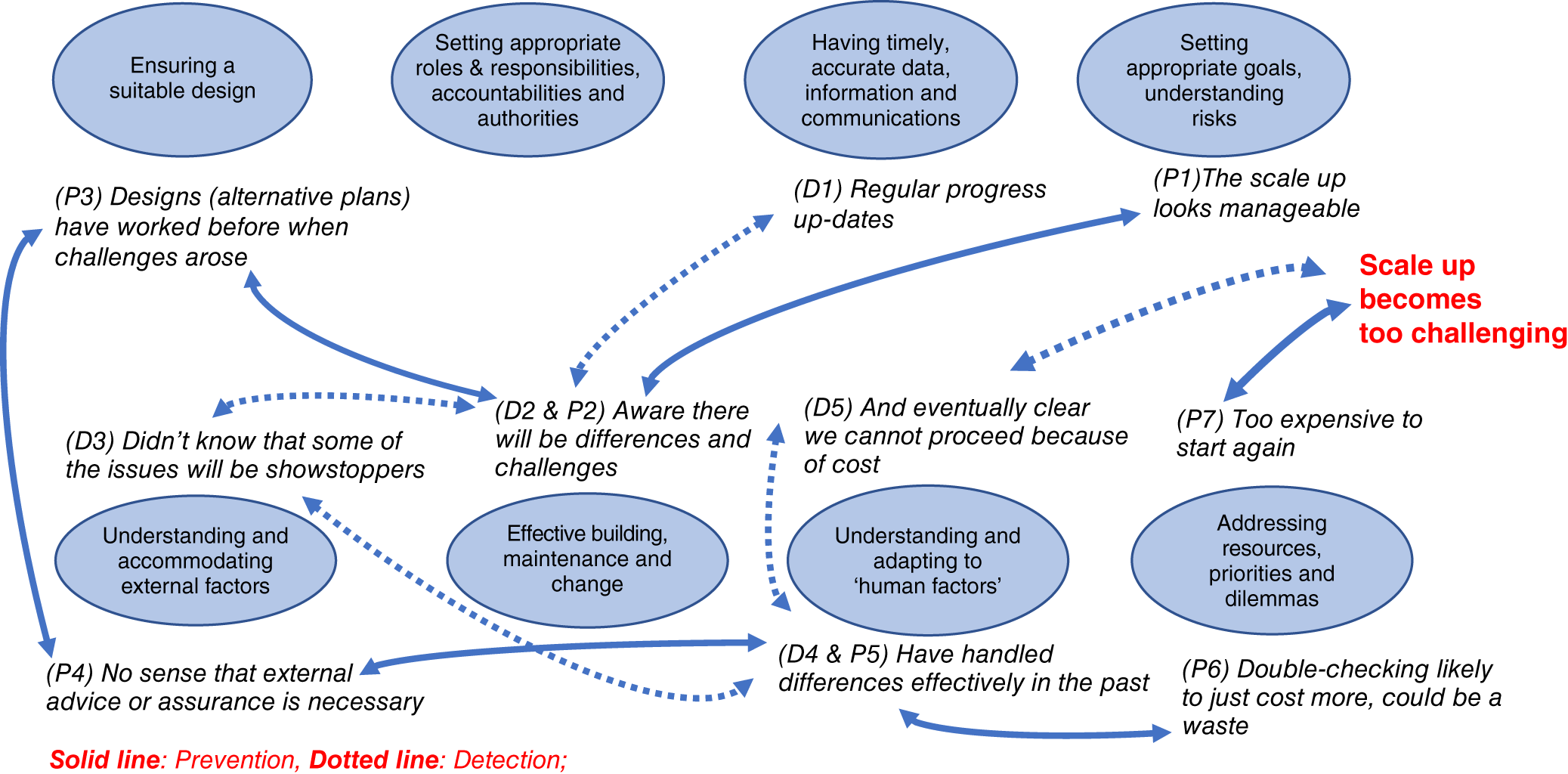
Diagram 4.2 Eight ways to understand why, with connections – scaling up surprises
When to use it
Scaling up a chemical manufacturing process from pilot to full production.
Expanding a software system to handle ten times the user load.
Growing a small business into a larger operation with new locations.
Increasing the capacity of a logistics network to handle peak demand.
FROM THEORY TO EVERYDAY LIFE
In practice
Chemical Plant Scale-Up
A chemical plant may work well at a small scale yet encounter unfamiliar technical problems when expanded. Wright uses this situation to explain why experience with earlier projects cannot settle whether a new scale-up is feasible.
Design Engineer Oversight
Design engineers recognized as experts missed an obvious step in creating a design, resulting in a process failure that took a year to diagnose. A peer review of the design could have caught the error and avoided the costly delay.
A MOMENT TO REFLECT
Put it to work.
What assumptions are you making about a current scale-up that might be incorrect?
How can you introduce external peer review or expert consultation early in the process?
How has past success led you to underestimate potential roadblocks?
Often confused with
References
- If— — Rudyard Kipling (1895)
- Human Error (Swiss Cheese Model) — James Reason (1990)
CONTINUE THE CONVERSATION
Source texts
- Beyond the Five Whys Root Cause Analysis and Systems Thinking (James C. Paterson)