Safety-I Mindset and Cynefin: The Ordered Solution Trap
In the Cynefin safety workshops described, participants placed common safety tools in the Clear and Complicated domains, while the problems they faced spanned all domains. The authors argue that rules and analysis alone cannot address every complex interaction in daily work.
THE IDEA
Key-point #1: Work with the system as a whole
An excessive focus on the avoidance of accidents has resulted in our dominant mindset that safety is an ordered system. Safety professionals typically take a Complicated approach to safety using their expertise to interpret safety acts, laws and regulations passed down the Safety Spear (illustrated in the source’s Figure 1). They then turn them into governing policies, standards, systems, rules and procedures. Rigid ones, like Golden Safety Rules, are in the Clear domain and join highly constrained procedures called Best Practices. (10) Like best practices, they are appropriate when clear and obvious order characterizes the space or practice. (for example, surgeon scrub-down procedures and confined-space entry checklists).
Workarounds and rule bending, or breaking to get the job done, are “weak signals” that at least some of your safety rules are not up to the variability and diversity of daily work. When deviations are discovered, the Safety-I response is to add more rules to fix the previously unknown, but now identified, risk. Yet an excessively constrained work environment puts workers and the organization at risk in several ways:
- Too many rules to remember cause cognitive overload and can lead to anger and frustration, which leads to worker distraction.
- Questionable workarounds are often passed down from masters to apprentices as tacit knowledge, and become dubious generational heuristics.
- Workarounds become habits and start becoming part of the culture. “Normalization of deviance” is a term used by sociologist Diane Vaughan to describe the process where a clearly unsafe practice comes to be considered normal if it does not immediately cause a catastrophe, “a long incubation period [before a final disaster] with early warning signs that were either misinterpreted, ignored or missed completely.” (11) (The original example cited by Vaughan was the events leading to the Space Shuttle Challenger disaster.) (12) For fear of upsetting senior executives, management may refuse to change an extreme rule despite workers’ pleas. An example is the forced wearing of hard hats under open skies in extremely hot weather. Todd Conklin spoke about the danger, “Workers don’t cause failures. They trigger latent conditions that lie dormant in organizations waiting for a specific moment in time.” (13)
- A culture of fear builds when workers experience “can’t win” dilemmas. If they bend the rule, then they will be punished. If they bend the work to comply, then the job doesn’t get done and they may be punished.
A further issue concerns incentives:
- Safety incentives which are meant to improve safety, like bonuses and rewards, often compromise safety performance and result in unintended consequences. For example, an “All incidents must be reported” policy runs up against an incentive where a bonus is paid for the frequency and severity of accidents occurring below a certain threshold. Workers may game the system by not reporting incidents.
During a series of Cynefin and Safety training workshops we delivered, participants mapped their way to a startling understanding. One exercise we ran finished with the participants creating two mappings: (1) a mapping of safety solutions, and (2) a mapping of safety issues they identified as needing resolution. Figure 3 below reveals the pattern of how the most common safety solutions were mapped onto the Cynefin Framework. These included: safety rules, standard operating procedures, checklists, personal protective equipment (PPE), vehicles, tools, and equipment manuals. They were placed in the Clear (previously Obvious and Simple) domain. Root cause analysis, behavior-based safety programs, safety management systems, and Bowtie risk analysis were placed in the Complicated domain. These solutions use rules or analysis of cause and effect to address situations treated as ordered.
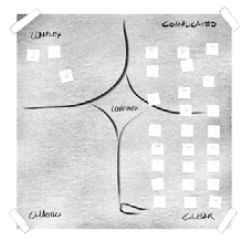 Figure 3. Cynefin mapping of safety solutions
 Figure 4. Cynefin mapping of safety issues
Not surprisingly, the safety issues cover all the Cynefin domains (Figure 4). The contrast between the two maps always stuns workshop attendees. While there are plenty of ordered Clear and Complicated issues to be resolved, few acknowledge Complex domain issues. The key takeaway from the exercise was that despite the Safety-I mindset’s efforts to improve safety, it falls short of tackling intractable safety issues when complex interactions make cause and effect difficult to determine in advance.
A similar finding emerged in a Deloitte Mining Safety case from 2009. (14) Figure 5 identifies the results from that engagement showing how many of the safety issues for this company’s South African mining operations were complex. The authors contrast those complex issues with tools designed for a predominantly ordered context.
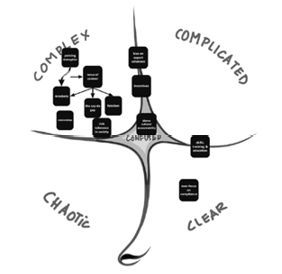 Figure 5. Unaddressed safety issues reside in the Complex domain
This narrow view of safety often omits complex aspects of safety – culture, attitudes, group behavior patterns, etc. In a personal communication with a manager during a Cynefin Safety workshop he stated, “We’re really good at using a hammer. So good that we see everything as a nail. We blindly start hammering away even if it’s a screw. And when we don’t get the results we want, we still keep pounding away to the point of damaging the wood.”
When to use it
Safety management in high-risk industries like mining or construction.
Evaluating workplace safety policies to ensure they match the complexity of actual risks.
Redesigning safety incentives to avoid gaming and encourage reporting.
Training safety professionals to recognize and address complex safety issues beyond simple rules.
FROM THEORY TO EVERYDAY LIFE
In practice
Forced Hard Hat Use in Extreme Heat
The authors use hard hats in extreme heat to illustrate a possible conflict between a rigid rule and working conditions. Their concern is how managers hear and respond to workers’ reports about such conflicts.
Safety Incentives and Underreporting
An 'All incidents must be reported' policy can conflict with a bonus for low recorded accident rates. Workers may face a financial incentive to leave incidents unreported.
A MOMENT TO REFLECT
Put it to work.
How might your organization's safety rules be contributing to normalization of deviance?
What safety issues in your workplace are complex but being treated with ordered solutions?
How can you identify and address the mismatch between safety solutions and the actual complexity of issues?
Often confused with
CONTINUE THE CONVERSATION
Source texts
- Cynefin - Weaving Sense-Making into the Fabric of Our World ED02 (Dave Snowden Sonja Blignaut Zhen Goh)