Lay Theories of Mental Contamination and Debiasing
People have a set of intuitive strategies—exposure control, preparation, resistance, remediation, and behavior control—to avoid or undo unwanted influences on their beliefs and emotions, but they often overestimate the effectiveness of later-stage defenses, especially for beliefs, leading to persistent bias.
THE IDEA
A CLOSER LOOK AT LAY THEORIES OF MENTAL PROTECTION
Unwanted influences can affect beliefs, such as judgments about a job candidate, as well as emotions. Wilson and Brekke (1994) defined mental contamination quite broadly, including cases in which any response is biased in an unwanted way (i.e., emotions as well as beliefs).
Wilson, Gilbert, and Wheatley (1998) examined the manner in which people manage emotions versus beliefs. They also took a closer look at the specific strategies people believe they can take to avoid unwanted influences on these responses. As seen in Fig. 10.2, there are five strategies people believe they can adopt at different points of the contamination process. The left side of this figure shows a time line of actual contamination, from people’s anticipation that a state might become contaminated, to exposure to a contaminant, to unwanted changes in a psychological state. The right side of the figure shows the different strategies people think they can adopt at each time point to avoid or undo the contamination.
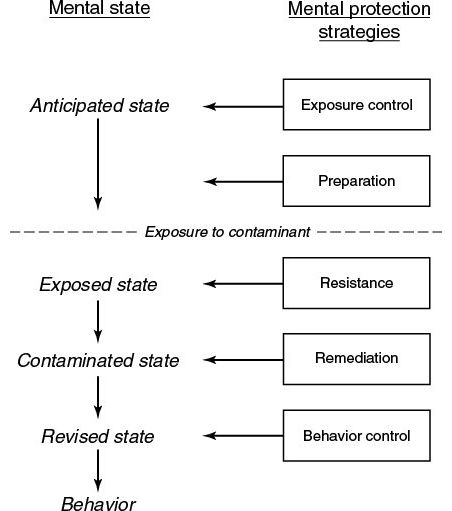
Figure 10.2. Lay beliefs about debiasing (from Wilson et al., 1998).
The first line of defense is what Gilbert (1993) termed exposure control, which is the decision whether to allow a potentially contaminating stimulus to enter our minds. If we are concerned that our liking for a student will bias the grade we give his or her paper, we can grade the papers blindly to reduce the influence of knowing who wrote them. Exposure control, to the extent that it is feasible, is the most effective defense against contamination. A stimulus that never enters our minds cannot bias our judgments or feelings.
The second line of defense is preparation. If we know in advance that we will be exposed to potentially contaminating information, we can take steps in advance to blunt its impact. A person about to hear a speech from an untrustworthy source, for example, can try to strengthen her mental defenses by engaging in anticipatory counterarguing.
Once we are exposed to a contaminant – we hear the speech or know the author of the term paper we are grading – there are three steps people can take to try to avoid or undo contamination. The first of these steps is resistance, which occurs after a stimulus is encoded but before it has had an unwanted effect on our beliefs or emotions, resulting in what Wilson et al. (1998) called an exposed state. Resistance involves any mental operation that attempts to prevent an encoded stimulus from having an adverse effect, similar to an immunologic response that kills a virus after it enters the body but before it causes disease.
If resistance fails, people end up with a contaminated state. The next line of defense is remediation, defined as any mental operation that attempts to undo the damage done by a contaminant. People end up with a revised state, which, if remediation is completely successful, is the same as the original mental state. If remediation fails or is insufficient to correct the damage, then people’s last line of defense is behavior control. This is the attempt to prevent one’s contaminated state from influencing behavior. If our beliefs have changed in an unwanted way (e.g., a lowered evaluation of a job candidate due to his or her race), we can try to stop ourselves from acting on that belief.
We should stress that these stages are meant to capture people’s beliefs about how to avoid or undo bias and are not necessarily a portrayal of effective strategies. In terms of effectiveness, it is clear that the earlier the defense, the better. The most effective defense is preventing exposure to contaminating information, and the least effective is trying to undo or ignore contamination once it has occurred.
People seem to appreciate this point when it comes to managing their affect and emotions. Much of our lives is spent arranging environments in ways that maximize our pleasure, with the recognition that once we are exposed to negative stimuli, the game is mostly lost. Given the choice of encountering an unpleasant and argumentative colleague who always manages to spoil our mood, or taking a longer route to our office that avoids the colleague, most of us choose the latter option. Just as it is better to avoid the flu by avoiding exposure to the virus, so is it better to maintain a good mood by avoiding contact with stimuli that will ruin it – a fact that people generally appreciate.
When it comes to avoiding contaminated beliefs, however, people seem to have more faith in the later defenses of resistance and remediation and are thus less likely to engage in exposure control. People seem to believe that there is little danger in being exposed to information that might bias their beliefs because they think they have the ability to resist or remediate any unwanted influences. As noted by Gilbert (1991), people assume that belief formation occurs according to a process outlined by Descartes: First we comprehend a proposition (e.g., “the moon is made of blue cheese”), then we freely decide whether to accept it as true (e.g., whether it fits with our belief system). Gilbert (1991) argues persuasively that belief formation actually operates according to a process described by Spinoza, whereby we initially accept as true every proposition we comprehend, and then decide whether to “unbelieve” it.
One implication of Gilbert’s Spinozan model is that people have a misplaced belief in resistance (see Fig. 10.2). To be able to resist unwanted influences on our beliefs before they change our minds, we would have to be able to encode a message without it influencing us, placing it in a kind of mental holding pattern. We would then have to neutralize the message in some way, such as by thinking of counterarguments. There is no such thing as a mental holding pattern, Gilbert argues, because people initially believe all propositions. According to this view, people cannot encode something without believing it; thus, mental resistance is impossible.
People’s faith in remediation is also misplaced, we suggest, because of the difficulty of recognizing that contamination has taken place. Even if we correctly guess that it has, we have to know how to correct for the bias. People can fail either to detect bias or to correct for it. They may recognize these difficulties in others while overestimating their own control.
Why are people’s strategies for managing their beliefs less effective than their strategies for managing their emotions? One reason, we suggest, is the ease of detecting contamination in these different realms. A biased belief rarely comes with an obvious subjective warning—contaminated judgments do not smell. It is much easier to tell whether our emotions are “contaminated” – we feel lousy. Consequently, we have developed better strategies for avoiding contaminated emotions, namely exposure control (avoiding exposure to possibly contaminating information).
When to use it
A hiring manager removes names and photos from resumes to reduce the influence of those cues during initial screening.
A voter reads a vivid political message and then checks whether the resulting belief change rests on evidence, emotional framing or unsupported claims.
A person avoids watching a negative political ad because they know that once exposed, it will be difficult to undo the emotional impact.
A researcher pre-commits to a data analysis plan before collecting data to prevent their hypotheses from biasing their interpretation.
FROM THEORY TO EVERYDAY LIFE
In practice
Blind grading to avoid bias
A teacher concerned that liking a student will bias the grade assigns papers anonymously, thus preventing exposure to the contaminating information of the student's identity.
Avoiding an unpleasant colleague to preserve mood
A person chooses a longer route to their office to avoid an argumentative colleague who always ruins their mood, illustrating exposure control for emotions.
A MOMENT TO REFLECT
Put it to work.
When you last tried to resist an unwanted influence on your beliefs (e.g., a persuasive advertisement or a biased argument), how successful were you? Did you notice any changes in your beliefs despite your efforts?
Think of a situation where you used exposure control to protect your emotions (e.g., avoiding a stressful conversation). Why might such a strategy be harder to apply to your beliefs?
Often confused with
References
- Mental contamination and mental correction: Unwanted influences on judgments and evaluations — Wilson, T. D., & Brekke, N. (1994)
- Lay theories of mental contamination — Wilson, T. D., Gilbert, D. T., & Wheatley, T. (1998)
- How mental systems believe — Gilbert, D. T. (1991)
- The assent of man: Mental representation and the control of belief — Gilbert, D. T. (1993)
CONTINUE THE CONVERSATION
Source texts
- Heuristics and Biases The Psychology of Intuitive Judgment (Thomas Gilovich, Dale Griffin, Daniel Kahneman)