Inferred Intent: Providing Google with a “Tell”
Search engines infer user intent from the phrasing of queries, leading to biased results that align with the user's implied stance. This can reinforce confirmation bias by returning results that match the positive or negative framing of the query.
THE IDEA
Inferred Intent: Providing Google with a “Tell”
Back in 2019, an executive familiar with Google’s search algorithms was interviewed for a Wall Street Journal exposé about how the company tweaks its algorithms. “There’s this idea that the search algorithm is all neutral and goes out and combs the web and comes back and shows what it found, and that’s total BS,” the executive said. “Google deals with special cases all the time.”10
It’s true: Google’s algorithms reflect some very real human prejudices and biases.11 But our own responses are hardly free from bias, either. Minor variations in how we phrase a search (think of poker, where a “tell”—a seemingly imperceptible twitch of the eye, for example—gives away that we’re bluffing) can produce decidedly different results. Let’s see how.
You set out to research a proposed soda tax in your city. You’ve heard arguments for and against. On one side are people who say a soda tax lowers consumption and reduces obesity. On the other are those who say a soda tax hurts people with lower incomes because bottling companies lay people off, and where the tax has been tried, it has backfired. So, let’s consider two queries, altering but a single word: “Are soda taxes a good idea?” and “Are soda taxes a bad idea?” Same question, really, that in a perfect search world would produce the same result. But that’s not how Google sees things (to be more precise, that’s not how Google’s algorithms operate). Two ways of asking the same question give us dramatically different results. Let’s start with the “good” query.
The top result, from Time magazine, cites a JAMA (Journal of the American Medical Association) study suggesting the taxes lead to better health. The result from Stanford University says the taxes reduce consumption. National Public Radio declares the taxes “work.”
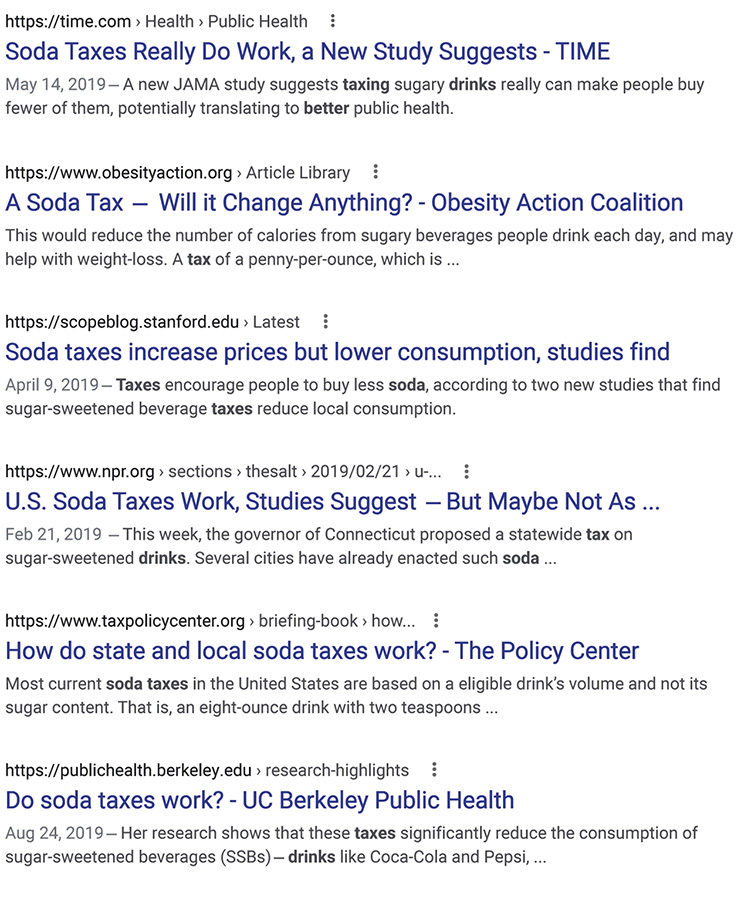
Figure 3.19 “Are soda taxes a good idea” search results, December 2020. (Google and the Google logo are trademarks of Google LLC.)
What happens when Google sees “bad”? It’s just as accommodating. An ad at the top says that in Philadelphia the tax was a “mess” and didn’t change drinking habits. A featured snippet raises the ante even more, claiming that soda taxes lead to an increase in alcohol consumption. And so on. (But note that one of the results from the “good” query, a result from the University of California, Berkeley School of Public Health, slips in too.)
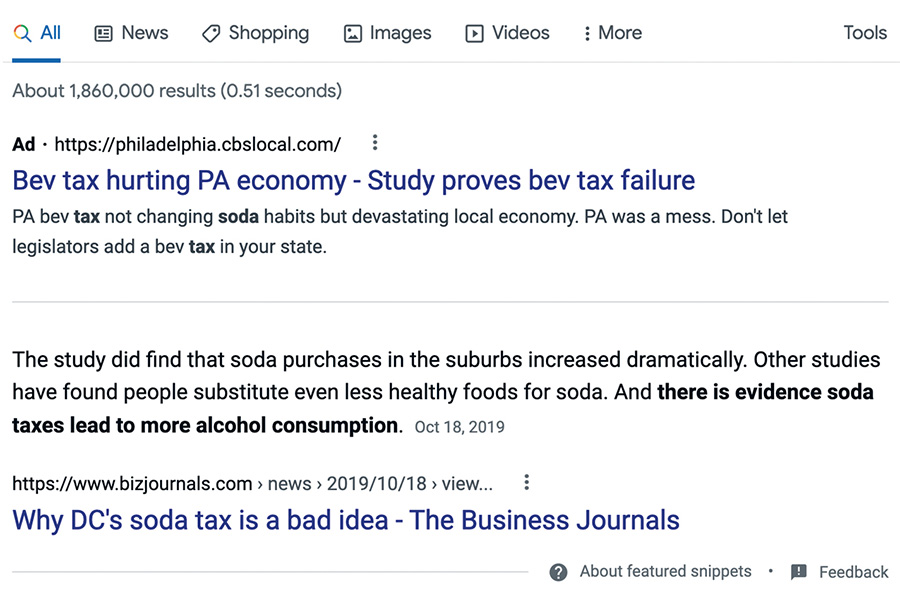
Figure 3.20 Ad and featured snippet for “Are soda taxes a bad idea” search. (Google and the Google logo are trademarks of Google LLC.)
Part of what’s going on has to do with keywords. Results in favor of soda taxes are just more likely to include “good” (and other positive terms: “beneficial,” “effective,” “helpful,” and so on). Likewise, results against a tax tend to include “bad” and its various synonyms. But another part of what was going on has to do with inferred intent. Google sees “good” or “bad” and delivers what it thinks you want. A positive or negative search term loads the dice, crafting the kind of response we want and expect. Phrasing queries in a more neutral way—for example, “Do soda taxes work?”—will often produce better and more balanced results.
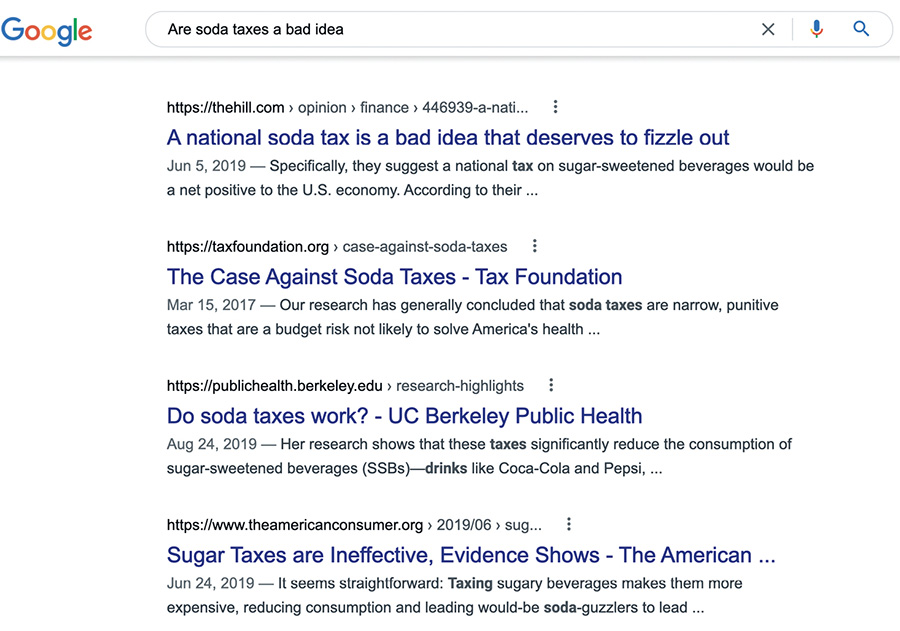
Figure 3.21 “Are soda taxes a bad idea” search results. (Google and the Google logo are trademarks of Google LLC.)
When to use it
When researching a controversial topic, use neutral phrasing to avoid biased results.
When evaluating evidence, consider how the search terms might have influenced the results you encounter.
When teaching information literacy, use this example to illustrate how algorithms can amplify cognitive biases.
FROM THEORY TO EVERYDAY LIFE
In practice
Soda Tax Query Framing
When searching 'Are soda taxes a good idea?' Google returned results from Time, Stanford, and NPR suggesting the taxes work. In contrast, searching 'Are soda taxes a bad idea?' returned an ad calling the tax a 'mess' and a snippet claiming increased alcohol consumption. Google’s inference about the searcher’s intent biases the results when the same question is phrased positively or negatively.
A MOMENT TO REFLECT
Put it to work.
How might the way you phrase a search query affect the information you find? What steps can you take to phrase queries more neutrally to get balanced results?
Consider a recent topic you researched online. Did the framing of your initial query potentially skew the results you saw?
How could awareness of inferred intent help you become a more critical consumer of search engine results?
Often confused with
CONTINUE THE CONVERSATION
Source texts
- Verified How to Think Straight, Get Duped Less, and Make Better Decisions about What to Believe Online (Mike Caulfield, Sam Wineburg)