Cognitive Bias
A cognitive bias is a systematic tendency in judgment that can produce departures from a relevant standard of evidence or reasoning. It differs from an isolated mistake, though a single decision may reflect both situational pressures and recurring habits. Recognizing a bias is a starting point for checking a judgment, rather than proof that a particular conclusion is wrong.
THE IDEA
Cognitive Bias
A cognitive bias is a systematic tendency in judgment that can depart from an appropriate standard of evidence or reasoning. Peer influence, desirable outcomes, or an apparent relationship between unrelated events can affect even a competent decision-maker. A single mistaken conclusion does not by itself establish a persistent bias. Situational pressures, including limited time, may cause an isolated error or strengthen a recurring tendency.
The account traces modern cognitive-bias research to the early 1970s and describes hundreds of experiments over the following four or so decades. Those experiments investigated recurring patterns rather than merely collecting examples of people being wrong.25
Still, there is no agreement on the source of cognitive bias. Numerous origin explanations have been suggested over the years, which can be grouped into two broad categories: (1) reasoning and (2) emotions. The first emphasizes limits on attention, memory, and information processing. Heuristics can make judgment manageable under those limits, but their usefulness depends on the task. A shortcut can work well in one setting and produce a systematic error in another; it need not be permanently fixed.
The second emphasizes how emotions affect judgment. Reasoning and emotion interact,26 so treating cognitive and emotional explanations as mutually exclusive is too simple. The relevant mechanisms can differ across tasks and situations.
The roughly 40 years of research summarized in the source produced many labels, including the availability heuristic, base rate fallacy, confirmation bias, omission bias, and gambler’s fallacy. At the time of the account, the relevant Wikipedia page listed nearly 200 types. A long list does not establish that every label describes a separate mechanism, and not every use of a heuristic produces an error.
Are there indeed that many distinct manifestations of cognitive bias? This raises a question about construct validity:27 does the concept, and the way it is measured, capture the phenomenon intended? One part of that assessment is whether it adds something beyond existing concepts or merely renames an already described pattern.
Peer review can scrutinize a claim, but anonymity between authors and reviewers does not establish that a construct is valid or independent of related constructs. Evidence about measurement, replication, and overlap is still needed. A further question is which broader patterns the various labels have in common. Synthesizing evidence produced by individual research studies using systematic reviews, the aim of which is to provide as complete as possible summary of published research relevant to a question at hand, individual studies-reported cognitive bias variants can be combined into larger, more general categories. Starting with approximately 100 commonly cited manifestations, listed in the source’s Appendix A, the author proposed a two-tier categorization with three broad types and narrower subtypes. Recalling the earlier discussion of sources of cognitive bias, the resulting bias categorization representation is predominantly information processing focused but it also hints of the role of emotions in the formation of cognitive bias. This is an important consideration insofar as it suggests material amounts of cross-person and cross-situation variability in the extent to which irrational or evidence-refuting reasoning may arise.
Figure 1.5 offers the graphical depiction of the meta-structure of cognitive bias.
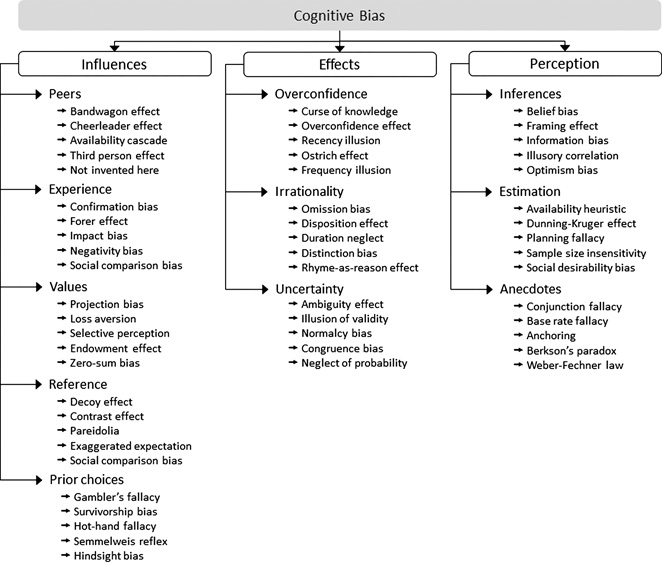
FIGURE 1.5 The Structure of Cognitive Bias: A Meta-Model.
In this proposed model, the broad contributors are influences, or external reference elements, such as peers, effects, or internal states-of-mind, and perception, or observation and processing of external stimuli. A decision-maker’s judgment can be adversely impacted by several types of influences, including opinions of peers, accumulated past experience and prior choices, as well as latent values and applicable aspects of his or her frame of reference. In addition, one’s ability to arrive at a rational conclusion can be further impeded by internal-to-self effects, which include overconfidence, general irrationality, and the more situationally emergent feeling of uncertainty. Lastly, the efficacy of one’s decision-making can be even more degraded by perception-based influences such as skewed inferences, flawed estimations, and overvaluing of anecdotal evidence. Recognizing a possible contributor helps identify what to check: an independent assessment, a base rate, an alternative explanation, or the reliability of the available observations.
Perhaps the greatest challenge emanating from the various forms of cognitive bias summarized in the meta-model depicted in Figure 1.5 is that those are consequences of what could be described as natural brain functioning. A decision-maker may neglect a base rate or perceive a relationship between unrelated events without intending to do so. The resulting judgment can feel as natural as one supported by the evidence. Awareness alone does not reliably prevent these errors. The range of tendencies shown in Figure 1.5 suggests a need for repeatable checks within the decision process. The Empirical & Experiential Evidence (3E) framework presented in the source focuses on using available data systematically. That requires checking how the data were selected and interpreted as well as whether they support the preferred conclusion.
When to use it
Auditing organizational decisions for peer pressure influence to improve objectivity.
Designing data-driven decision processes that counter base rate neglect and confirmation bias.
Training teams to recognize emotional triggers that lead to irrational choices.
Implementing systematic review methods to reduce the impact of multiple biases in strategic planning.
FROM THEORY TO EVERYDAY LIFE
In practice
Hiring decisions influenced by peer opinion
A hiring manager dismisses evidence relevant to the role because colleagues enthusiastically favor a candidate. Peer influence may be biasing the assessment if the enthusiasm substitutes for evaluating the evidence. Colleagues’ opinions can also contain useful information, so disagreement alone does not establish bias.
Ignoring base rates in medical diagnoses
A doctor diagnoses a rare disease based on a positive test result, ignoring the low base rate of the disease, leading to an overestimation of its likelihood—an example of base rate fallacy.
A MOMENT TO REFLECT
Put it to work.
Think of a recent decision you made that might have been influenced by peers—how could cognitive bias have played a role?
Identify a situation where you ignored statistical data in favor of a vivid anecdote. What bias was at work?
How might the structure of cognitive bias (influences, effects, perception) help you anticipate reasoning flaws in a team setting?
Often confused with
CONTINUE THE CONVERSATION
Source texts
- Evidence-Based Decision-Making How to Leverage Available Data and Avoid Cognitive Biases (Andrew D. Banasiewicz)