Algorithms
Algorithms are methodical, step-by-step procedures for solving problems or making decisions, characterized by substrate neutrality, mindless steps, and guaranteed results. They are predictable recipes that can be applied in computing, biology, business, and everyday life.
THE IDEA
Algorithms
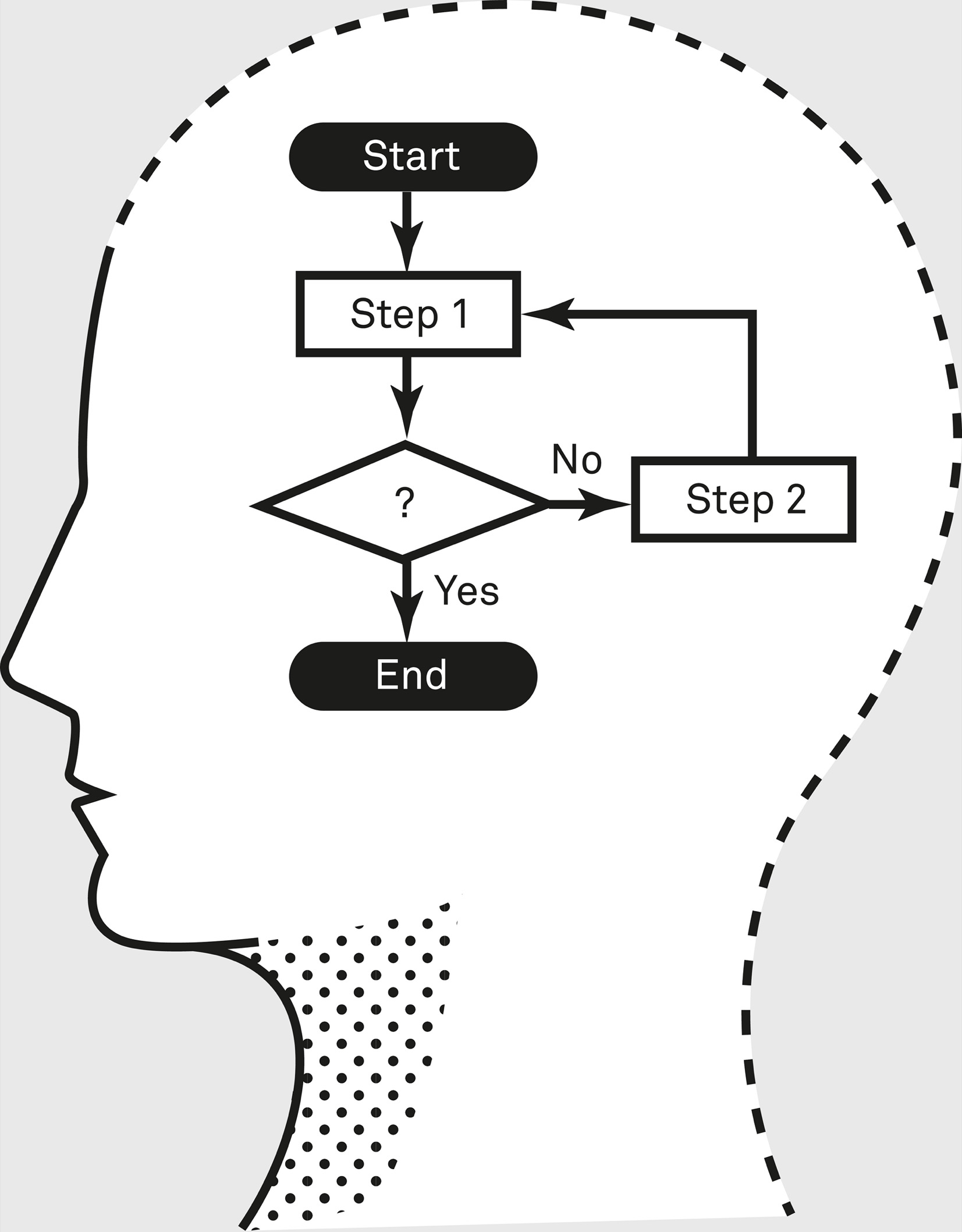
Recipes for success.
“Algorithm” is arguably the single most important concept in our world. If we want to understand our life and our future, we should make every effort to understand what an algorithm is, and how algorithms are connected with emotions. An algorithm is a methodical set of steps that can be used to make calculations, resolve problems, and reach decisions. An algorithm isn’t a particular calculation, but the method followed when making the calculation. For example, if you want to calculate the average between two numbers, you can use a simple algorithm. The algorithm says: “First step: add the two numbers together. Second step: divide the sum by two.” When you enter the numbers 4 and 8, you get 6. When you enter 117 and 231, you get 174.
—Yuval Noah Harari[1]
Algorithms turn inputs into outputs. An algorithm is like a recipe for a computer, giving it a step-by-step guide to solve a problem or complete a task. It’s a set of rules or instructions that if followed precisely lead to a predictable end, just like following a recipe leads you to a tasty dish.
One reason they are worth understanding is because many systems adjust and respond based on the information provided by algorithms. Another reason is that they can help systems scale. Once you identify a set of steps that solve a particular problem, you don’t need to start from scratch every time. In this chapter we will explore how algorithmic thinking can help you prevent problems and discover answers.
Algorithms are useful partly because of the inherent predictability of their process. That’s why we like them. They are a series of if-then statements that are completely unambiguous. In Intuition Pumps and Other Tools for Thinking, Daniel Dennett defines an algorithm as “a certain sort of formal process that can be counted on—logically—to yield a certain sort of result whenever it is ‘run’ or instantiated.”[2] The reliability of a well-designed algorithm in terms of producing consistently logical results is its most attractive feature. Mix flour, water, eggs, and other ingredients in a certain way, and voilà! A scrumptious cake results.
Dennett includes the three defining characteristics of algorithms:
- Substrate neutrality: “The power of the procedure is due to its logical structure, not the causal powers of the materials used in the instantiation.”[3] It doesn’t matter whether you read your recipe on a phone or from a book; neither has an impact on the logic of the algorithm.
- Underlying mindlessness: “Each constituent step, and the transition between steps, is utterly simple.”[4] For a recipe to be an algorithm, it must tell you the amounts of each ingredient you need as well as walk you through the process in steps so clear that there is no room for interpretation or misunderstanding.
- Guaranteed results: “Whatever it is that an algorithm does, it always does it, if it is executed without misstep. An algorithm is a foolproof recipe.”[5] Using a good algorithm, the cake will look and taste the same every time.
Algorithms can be simple, like a recipe containing a clear set of instructions that do not vary over time. They can also be complicated, like computer algorithms that try to predict future locations of crime. Furthermore, if we extrapolate our ideas about algorithms beyond humans and our technology, it’s possible to consider something like the execution of DNA code as an algorithm, or human learning as being the product of biological algorithms.
Some algorithms can evolve and learn over time. Others stay static. Depending on the requirements of a system, different types of algorithms are more useful for obtaining the information necessary to maintain resiliency and proper functioning.
Moving beyond computers, all systems need algorithms to function: sets of instructions for adapting to and solving problems. Increasingly, algorithms are designed to be directionally correct over perfect. They often evolve—or are designed—to get useful and relevant enough outputs to keep the system functioning properly. Neither nature nor humans worry about creating algorithms that produce the most optimal outputs 100 percent of the time. When we look at systems, it’s useful to consider the underlying instructions dictating their behavior in order to determine how to intervene to improve them.
When to use it
Software development: writing code that follows a sequence of defined steps to process data.
Business operations: creating standard operating procedures (SOPs) to ensure quality and efficiency.
Personal productivity: developing a daily routine that algorithmically reduces decision fatigue.
Scientific modeling: using computational algorithms to simulate physical systems.
FROM THEORY TO EVERYDAY LIFE
In practice
Calculating an Average
A simple algorithm for averaging two numbers: Step 1: add the numbers together. Step 2: divide the sum by two. This procedure works regardless of the specific numbers used.
Baking a Cake from a Recipe
A recipe is an algorithm: it lists ingredients with precise amounts and provides clear, unambiguous steps. Following it exactly yields a consistent result each time, illustrating substrate neutrality (the medium doesn't matter) and guaranteed results.
DNA as a Biological Algorithm
The execution of DNA code can be viewed as an algorithmic process, where genetic instructions are carried out step-by-step to build and maintain an organism.
Predictive Policing Algorithms
Complex computer algorithms analyze crime data to predict future crime locations, helping police departments allocate resources more effectively.
A MOMENT TO REFLECT
Put it to work.
Think of a task you perform regularly. Can you break it down into a simple algorithm with clear steps? What would be the inputs and outputs?
How might algorithms influence your daily decisions without you being aware? Consider social media recommendations or search engine results.
If you were to design an algorithm for a common household problem (e.g., meal planning), what would the key decision steps be?
References
- Homo Deus: A Brief History of Tomorrow — Yuval Noah Harari
- Intuition Pumps and Other Tools for Thinking — Daniel Dennett (2013)
CONTINUE THE CONVERSATION
Source texts
- The Great Mental Models Volume 3 Systems and Mathematics